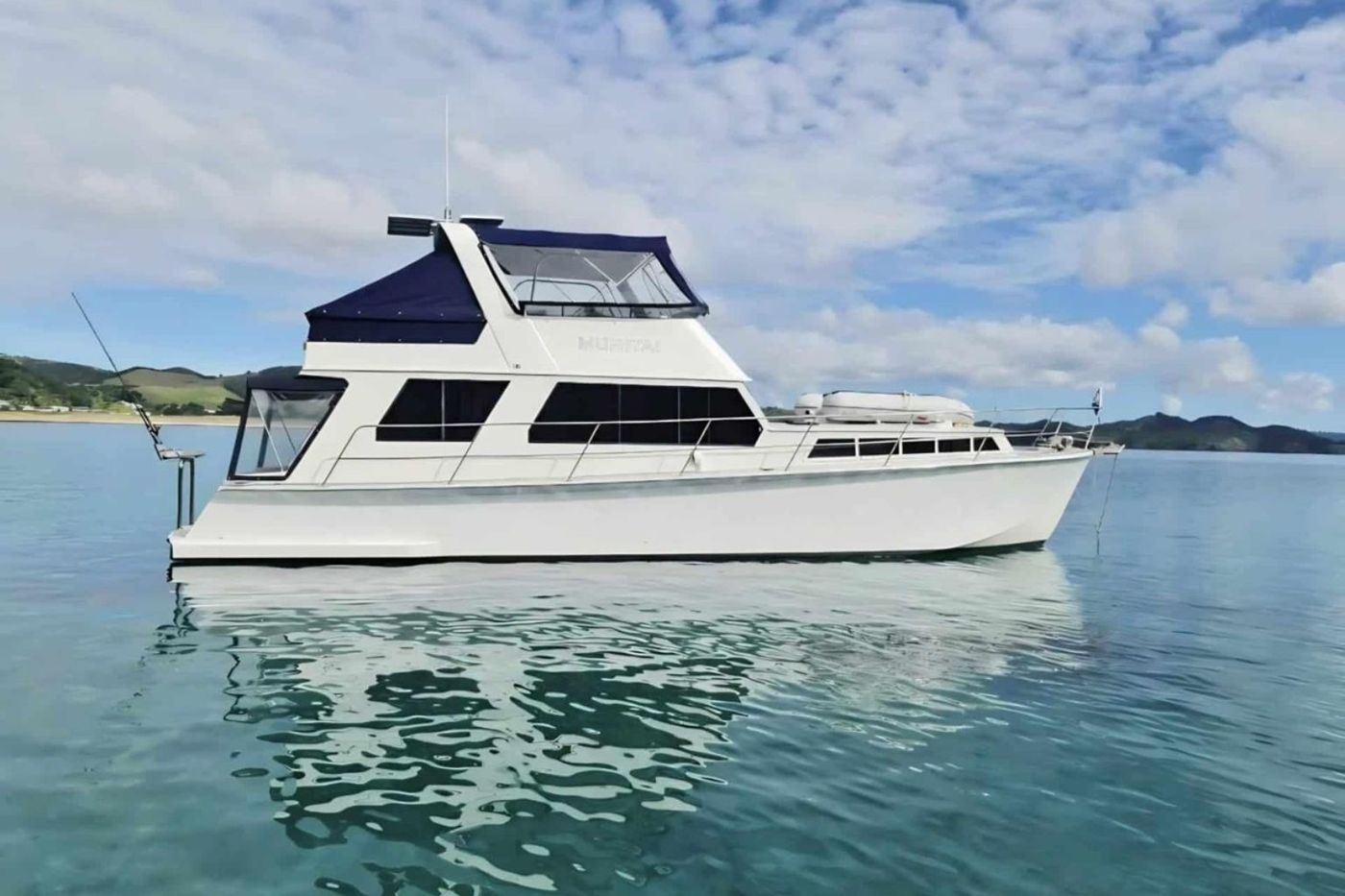
A 1965 launch from the drawing board of Alan Smith, Muritai represents the finest qualities of mid-century kauri craftsmanship and coastal cruising design, carrying ideas that were well ahead of their time.
Claude Allen Smith, known around Northland as Alan Smith, practised his trade through a period of considerable change in New Zealand boatbuilding. His Whangarei yard turned out a diverse range of yachts and launches, each reflecting a clear eye for proportion and the honest structural integrity of Northland kauri. The Easterly and Planet yachts have secured his lasting reputation, but Muritai demonstrates that his thinking on powerboat design was equally progressive.
When Smith put pencil to paper for Muritai in the mid-sixties, the typical New Zealand launch still followed shapes and habits inherited from the classic bridgedecker. Boats from builders including Sam Ford, Lane Motor Boat Co and Shipbuilders filled local harbours with their tall wheelhouses, enclosed saloons and compact cockpits suited to short coastal hops. Those patterns had held largely unchanged since the thirties. Extended liveaboard layouts were only beginning to be imagined, and even well-regarded family cruisers of the era favoured conservative interior arrangements.
The flybridge, now unremarkable on almost any cruiser, was then a genuine novelty. Salthouse made perhaps the first serious local statement with the fifty-two-foot Trinidad, launched in 1965 with a fully considered upper helm that attracted considerable attention. That vessel, though, was a custom build at the very top of the market. On mid-sized launches, flybridges were rare, and where they did appear they were typically added as afterthoughts rather than conceived as purposeful steering stations from the outset.
Viewed against that backdrop, Muritai reads as a thoroughly forward-thinking boat. Her shape and arrangement foreshadow the direction New Zealand cruisers would travel through the seventies and eighties.
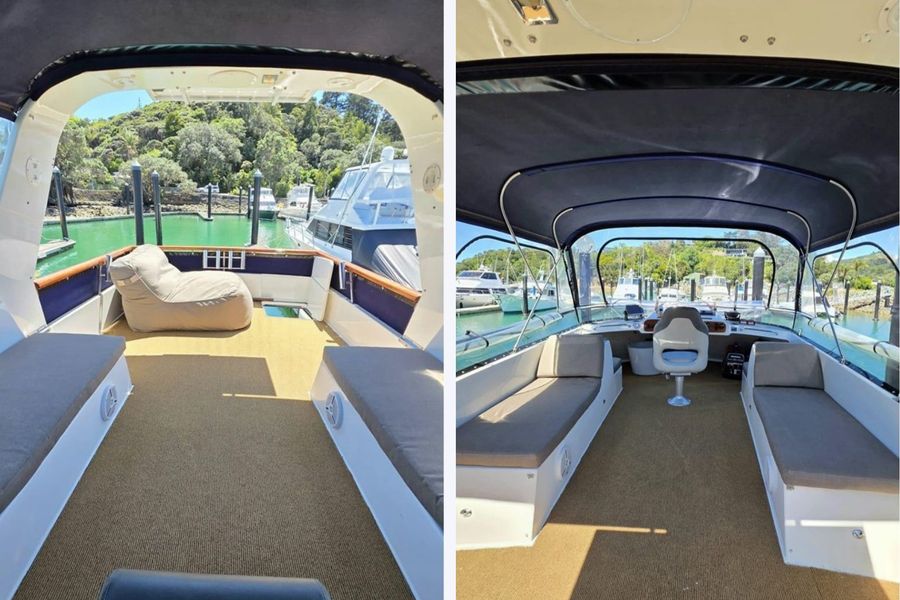
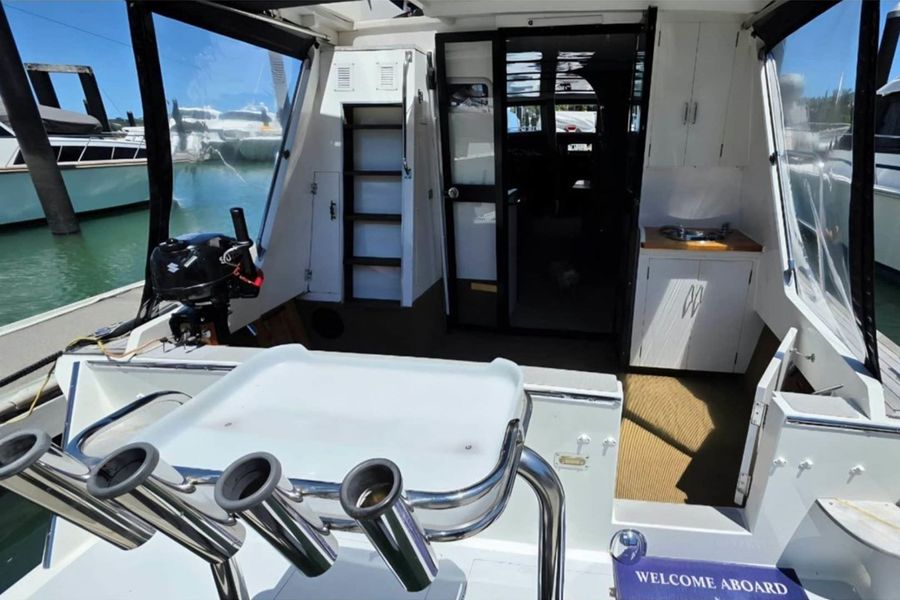
The cockpit is the first place that becomes obvious. It is broad, genuinely usable, and clearly drawn for people who want to spend time outside rather than simply pass through on the way to the saloon. An outdoor shower and sink are fitted neatly to one side, and weather curtains can enclose the whole area without difficulty. The space feels like a natural continuation of the saloon, offering an indoor-outdoor flow that would not become standard practice in New Zealand launch design for years. Where most sixties launches kept their principal social space firmly indoors, Muritai gave her cockpit equal standing. That single decision sets her apart from nearly everything being built around her at the time.
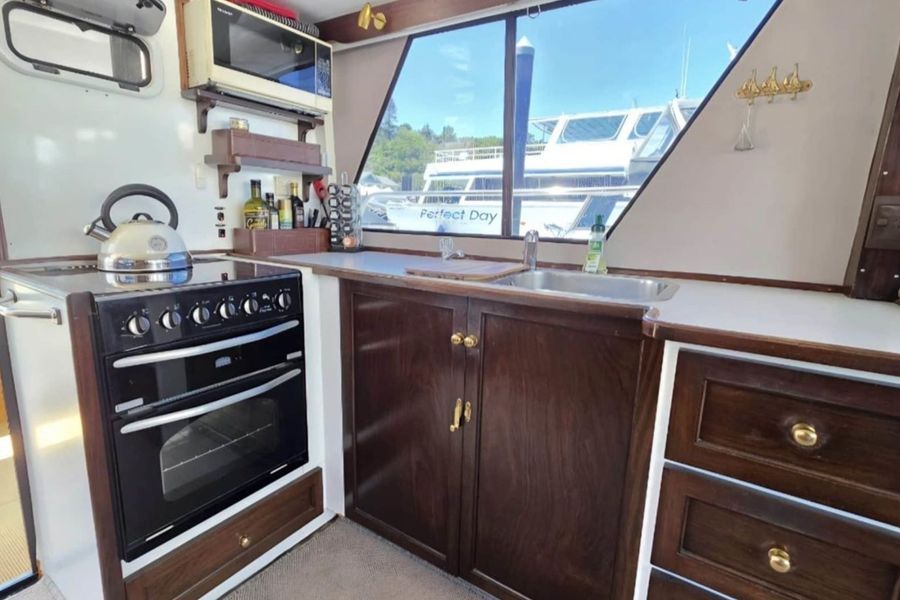
Step through into the saloon and the sense of modernity remains striking. The helm and galley share a single open level with ample room to move freely between them. Generous windows allow light to pour across the warm kauri joinery, and sightlines forward are clean and unobstructed. The arrangement suits extended life aboard rather than a quick overnight stop, a quality more readily associated with launches designed a decade or two later.
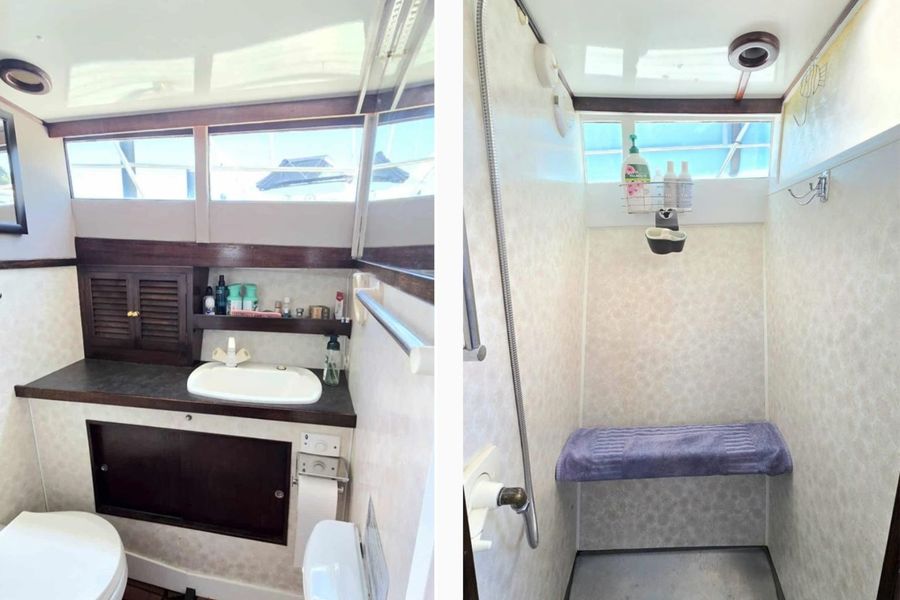
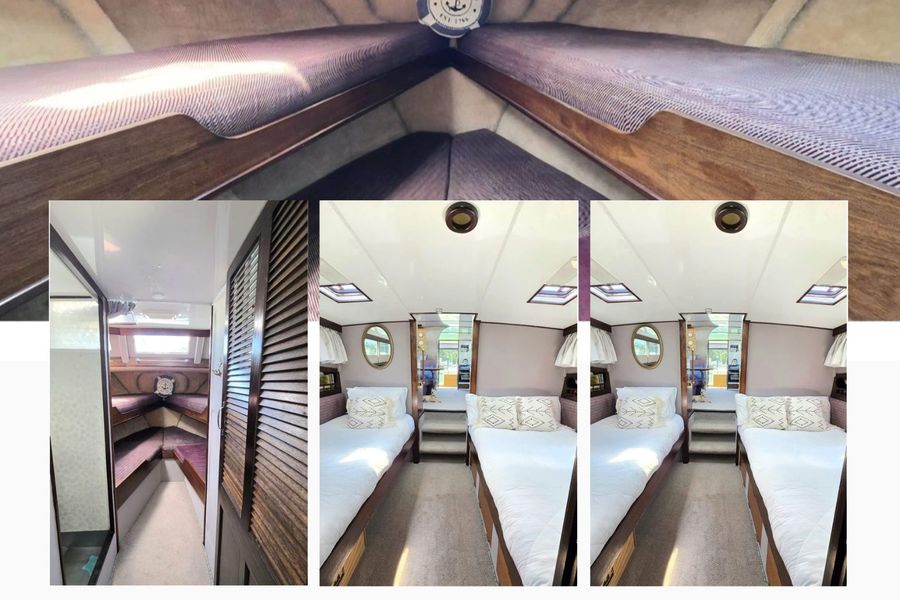
The accommodation follows the same practical and generous logic. Two double berths sit midships, where a vessel's motion is at its most comfortable. The forward vee berths four singles, giving flexibility for family groups, friends or visiting crew. It is the sort of layout New Zealanders tend to associate with fibreglass cruisers from the late seventies onward, yet here it is in a kauri launch from 1965.
The flybridge ties everything together and confirms Muritai's position as a design ahead of its moment. It is not an addition or a compromise but a purpose-drawn feature, offering excellent visibility into tight bays, past harbour entrances and through congested anchorages. A complete second helm station gives the skipper real options on a long coastal passage or when working in close quarters. Only a small number of mid-sixties launches carried flybridges conceived with this level of deliberateness. Smith adopted the idea early and carried it through with care.
Muritai has been maintained with the kind of steady, thoughtful attention that suits a vessel of her character. There have been no dramatic rebuilds, no wholesale changes of direction. Electrical systems have been kept current, with a new house battery bank and charger fitted in recent years. A tender and outboard are ready for shore trips. An inverter and live bait tank reflect the practical way she continues to be used. This quiet consistency of care is the reason she remains such a complete and honest example of what mid-century kauri boatbuilding could achieve. Nothing has been sacrificed, nothing rushed.
Some boats endure because of how well they were put together. Others last because of how well they were conceived. Muritai has the good fortune to possess both qualities. She occupies a particular point in New Zealand's boating story, the moment when tradition and new ideas were beginning to find each other, and she holds that moment with real clarity.
Her cockpit, her saloon, her accommodation and her flybridge all point toward the cruising boats this country would embrace in the decades ahead. She is proof that innovation does not always arrive loudly. Sometimes it comes quietly, planked in kauri, from a considered yard in Whangarei.
Designer and builder: Claude Allen Smith (Alan Smith), Smith's Boat Yard, Whangarei. Year launched: 1965. Construction: full-length kauri, traditionally built, carvel planked hull, timber superstructure and joinery throughout. Length: approximately 14 metres. Configuration: flybridge launch with enclosed main helm, large cockpit with outdoor shower and sink, single-level saloon and galley. Accommodation: two double berths midships, four single berths forward, with additional flybridge sleeping space available in settled conditions. Helm stations: main helm in saloon, second helm on flybridge with clear coastal visibility. Machinery: single diesel inboard, with cruising speed consistent with mid-century Northland launches. Systems and equipment: house battery bank (recently replaced), new battery charger, inverter, electrical WOF, tender and outboard, live bait tank, weather curtains for cockpit enclosure. Home waters: Tutukaka and the Northland coast. Notable design features: early adoption of a purpose-drawn flybridge unusual for a mid-sixties launch, a larger cockpit than was typical of the period, accommodation arranged for comfortable extended passages, and a saloon layout that anticipates later indoor-outdoor design thinking. Muritai is currently for sale through The Vinings Marine Group.