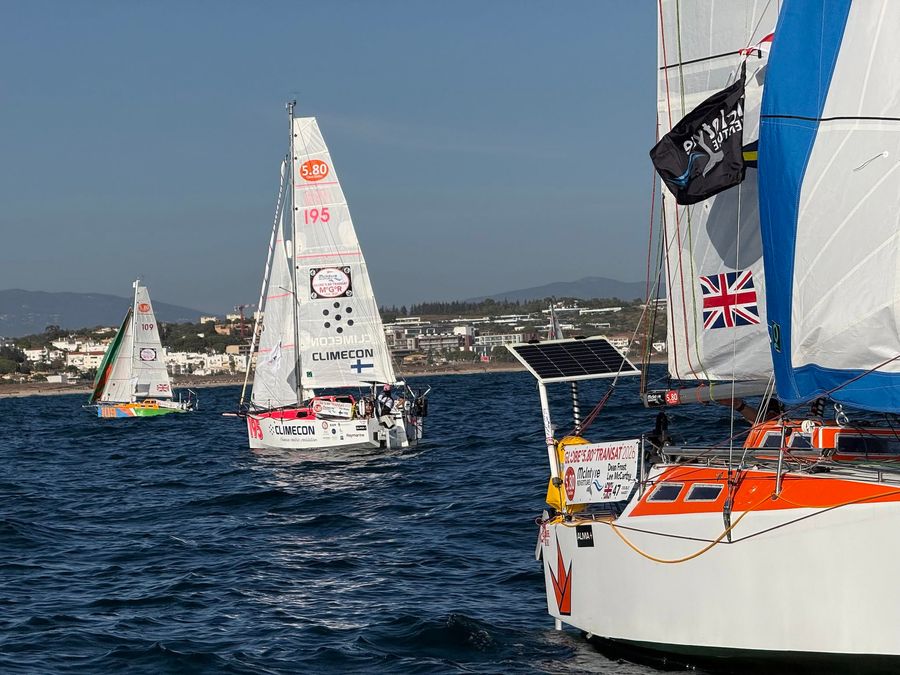
Nearly 60 days and almost 8,000 nautical miles into the 2026 McIntyre Golden Globe Race, the fleet has discovered that the Atlantic was just the warm-up act. The Southern Ocean lies ahead, and it does not negotiate.
Sixteen sailors left Les Sables-d'Olonne, France, on 6 September. Only 12 remain in the main race. They have crossed the North Atlantic, endured the Doldrums, crossed the Equator and fought deep into the South Atlantic, sailing 1968-era yachts alone with paper charts, sextants and windvane steering, with no modern electronic navigation and no shore team to call on when something breaks.
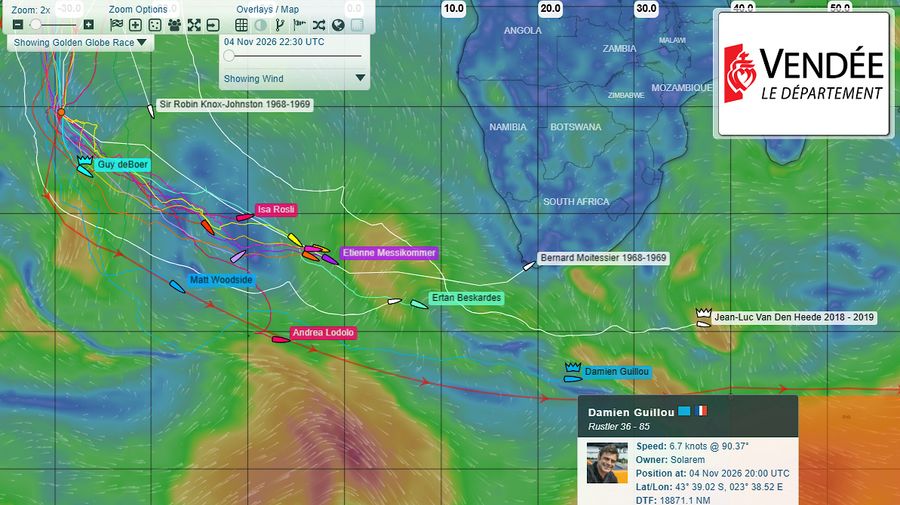
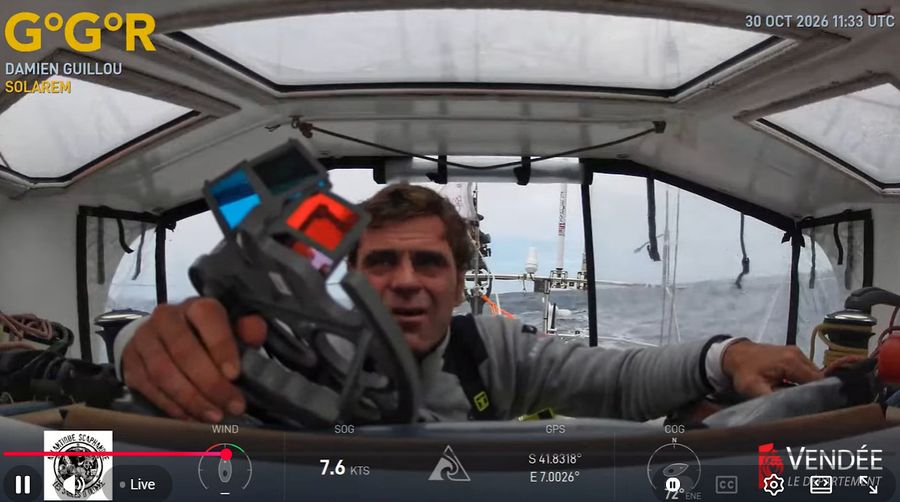
Race leader Damien Guillou, sailing the Rustler 36 Solarem, became the first skipper in the fleet to pass the longitude of the Cape of Good Hope on 3 November. For the Frenchman, it carries extra weight: his 2022 Golden Globe Race campaign ended in disappointment in these same waters. This time he is still racing hard, managing the Southern Ocean's weather systems with calm determination.
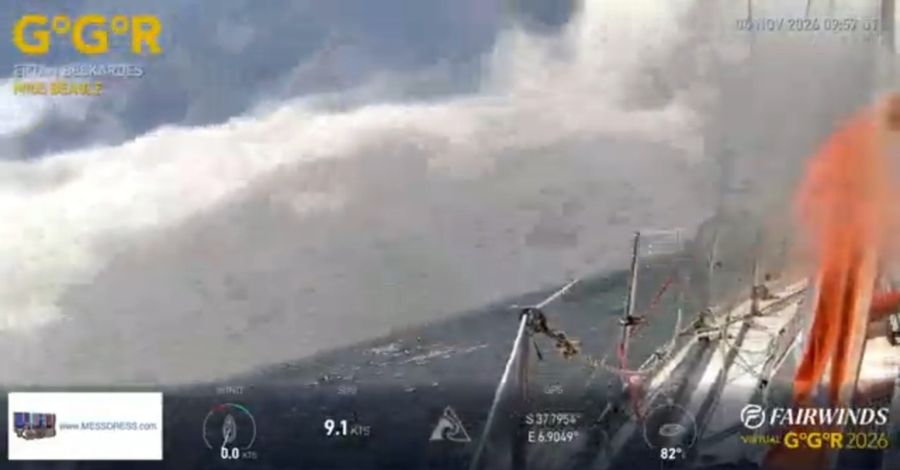
The past ten days have thrown three fierce storms at the fleet, with forecast gusts topping 70 knots in places. Israeli skipper Daniel Pinsky, aboard the Baba 35 Exodus, hand-steered under bare poles in winds he reported exceeding 60 knots, cold and soaked after repeated crushing waves. "I have been through storms like that before. Nevertheless I was afraid," he reported. With more bad weather threatening, he climbed the mast to recover a lost storm-jib halyard before reporting Exodus "back in shape and sailing nicely."
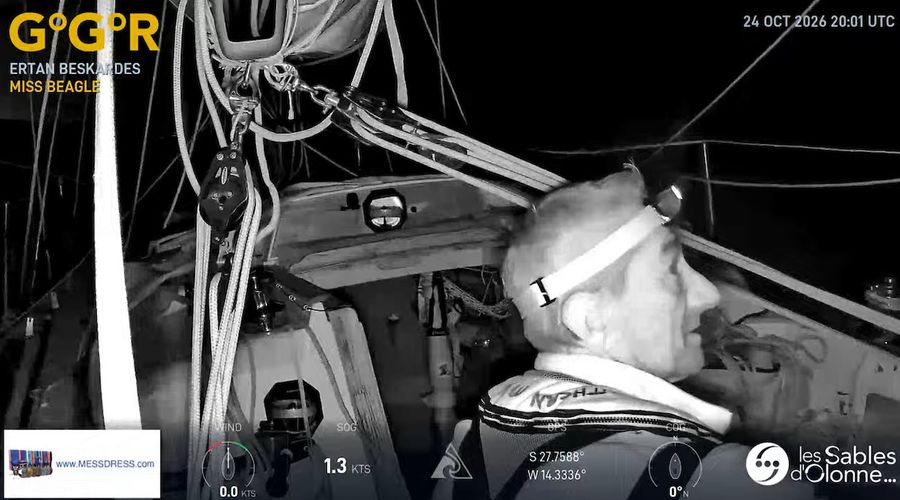
British sailor Henry Wootton, aboard Privateer, has taken repeated hits from breaking seas, including one that flooded the companionway. His report summed up the mood: "SKPR SOH FAILURE", skipper sense-of-humour failure, a wry line masking real doubts about the months ahead.
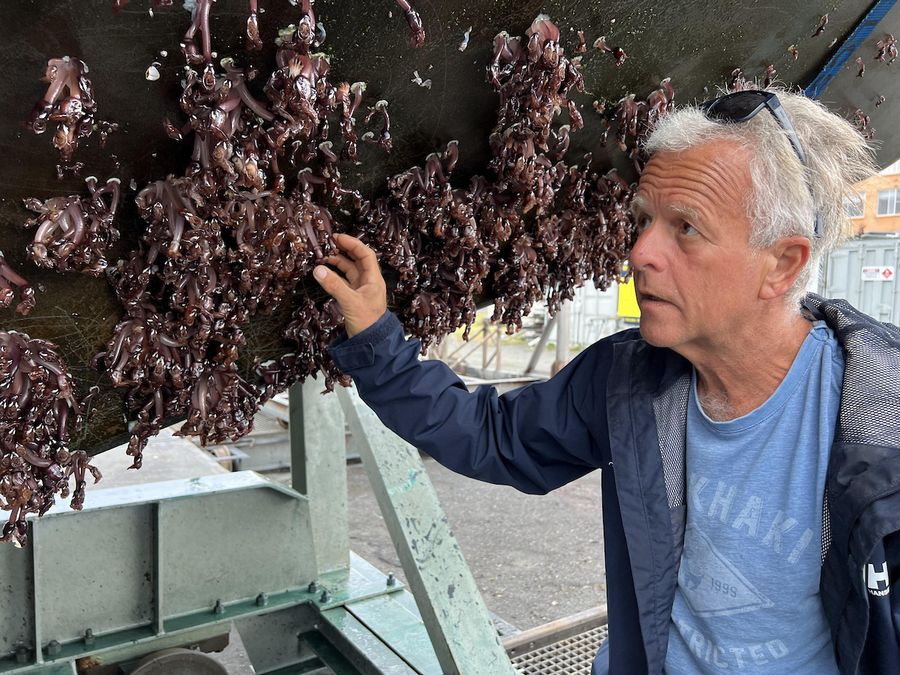
Not everyone has come through unscathed. American Guy deBoer, sailing Spirit, suffered a serious head injury and other painful injuries in a violent fall below decks. On 4 November, following medical advice, Race Management ruled him unfit to continue, even in the non-racing Chichester Class. He remains aboard, being supported with weather guidance while a safe destination is considered.
It is the latest blow to a fleet already thinned by retirements. Ireland's Pat Lawless, lying a strong second barely more than 100 miles behind Guillou, was forced out by a Solent-rig failure on 17 October. France's Louis Kerdelhué, the youngest starter at 21, retired in Recife after a punishing battle with the Doldrums left him more than 10kg lighter.
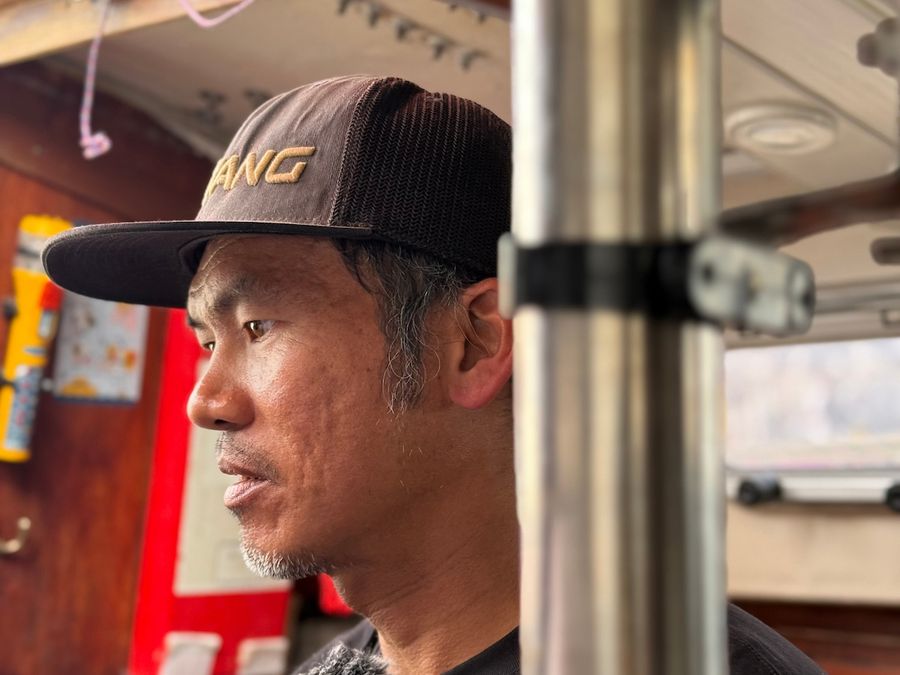
Elsewhere, Canadian Isa Rosli has spent punishing hours in cold water scraping barnacles from the hull of Olleanna. Swiss sailor Etienne Messikommer, who only weeks ago talked of going home out of frustration with the Doldrums, reported "the biggest sea I ever saw, beautiful & scary" and celebrated sighting his first albatross.
With roughly 20,000 nautical miles still to sail, the Indian Ocean, the Great Australian Bight, the Pacific and Cape Horn all lie ahead. More gear will fail, more storms will come. For some competitors, the hardest call in ocean racing, to stop, may still be waiting.