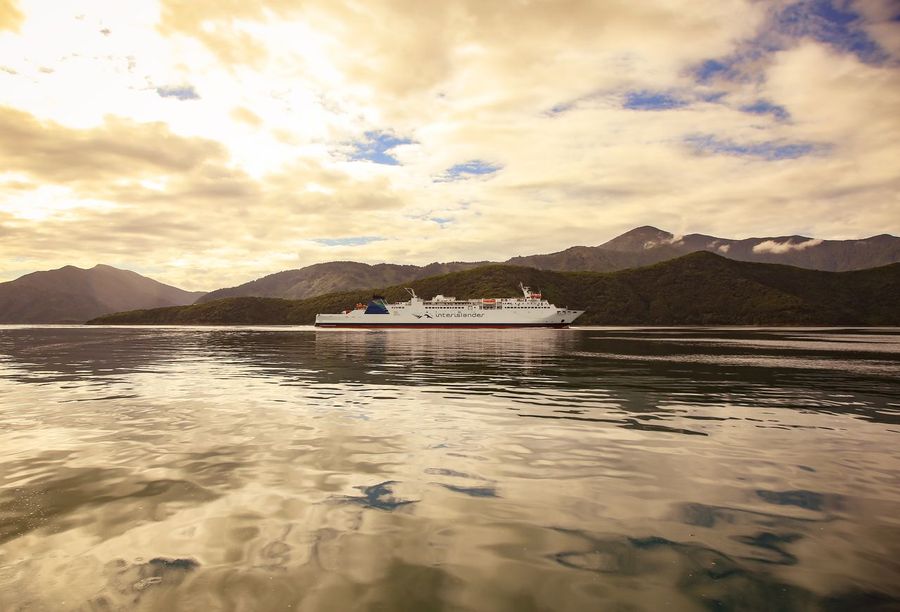
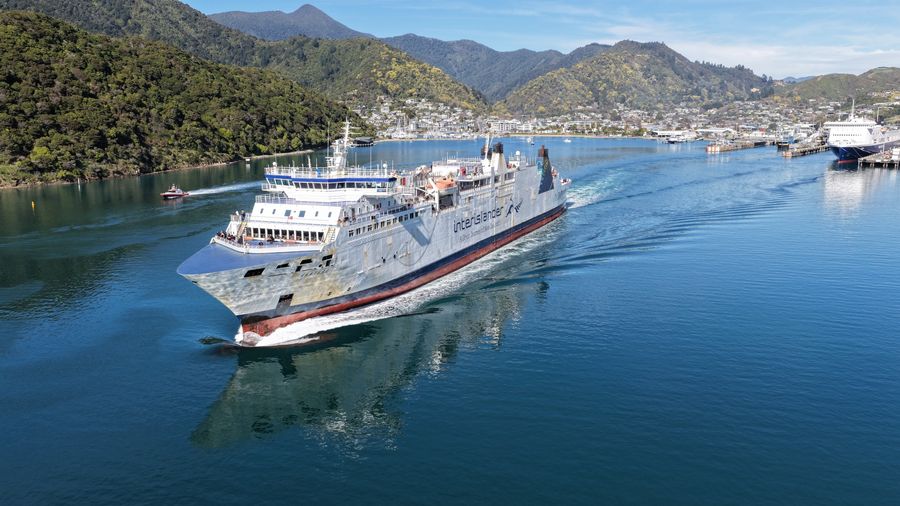
Conceived in the late 1990s as New Zealand's inter-island fleet neared renewal, Aratere was built by the Spanish yard Hijos de J. Barreras S.A in Vigo and completed in 1998. At 150 metres in length and 12,595 gross tonnes, she was engineered from the outset for the specific demands of Cook Strait. Her capacity reflected that dual purpose: 400 passengers, and either 1,005 lane metres of road freight or 425 metres of rail freight. Her name, drawn from te reo Māori, translates as "Quick Path", a fitting description for a vessel whose entire reason for existing was keeping two islands connected across one of the Southern Hemisphere's most notorious stretches of water.
The passage from Spain to New Zealand in December 1998 was anything but swift. Electrical fuses blew, gearbox couplings failed, and at one point the ship drifted helplessly in the South Atlantic. She limped into Wellington in January 1999, only to be delayed further by expired safety certificates. The catalogue of mechanical embarrassments earned her the nickname "El Lemon", a tag that Tranz Rail, her owners at the time, found far easier to acquire than to shed. What looked at first like a very expensive mistake would, over the following decades, prove to be something considerably more enduring.
When Aratere finally entered service, she brought with her some genuinely forward-thinking technology. The Ironsailor system, a vacuum-based mooring device developed in New Zealand, allowed her to be secured to the wharf in seconds rather than the minutes required by traditional rope handling. It was a detail invisible to most passengers but meaningful for wharf crews managing tight turnarounds at Wellington's busy ferry terminal. Her arrival also coincided with shifts in how New Zealanders and visitors moved around the country. Cut-price airfares were reshaping domestic travel habits, while a growing campervan culture was drawing more international tourists onto the ferries. Aratere had been designed with exactly that mix in mind, able to accommodate tourist vehicles while continuing to move rail freight across the strait.
The early years remained troubled. In February 1999, she lost power in Wellington Harbour and drifted, reigniting the reliability concerns that had followed her from Spain. A blown piston a year later caused weeks of disruption. In 2003, manoeuvring in rough weather, she struck the fishing vessel San Domenico, causing significant damage. In 2004, an automatic track-keeping system went astray and brought her perilously close to grounding in Tory Channel. By 2005, the Maritime Safety Authority had openly declared a "crisis of confidence" in the ship following a persistent run of mechanical failures, and she was briefly detained in Picton, a rare and pointed measure. Yet she kept sailing. Crews learned her habits, freight operators planned around her, and travellers accepted her as a fixture of the crossing, temperamental perhaps, but dependable enough when it counted.
The most dramatic chapter of her working life came in 2011, when Interislander sent Aratere to Singapore's Sembawang Shipyard for a remarkable transformation. Shipbuilders cut her in half and inserted a new 30-metre midsection, extending her overall length to 183.69 metres and lifting her gross tonnage to 17,816. A new bow and stern were fitted alongside propulsion upgrades, and her passenger spaces were refurbished throughout. The completed vessel could carry 650 passengers, 30 trucks or 230 cars, and 28 rail wagons, a substantial improvement on her original specifications. New Zealanders followed the project with genuine curiosity, tracking photos and updates from Singapore as the work progressed. Captain Bob Nixon, who was aboard for the return voyage, put the change in practical terms: "You stand at one end of the cargo deck and look to the other — they do look quite long. It makes a difference and it takes a lot longer to walk down there now." There was, inevitably, a less glamorous postscript. Reports of a rat infestation following the Singapore stay circulated quickly, pest controllers dealt with it, and the story lodged itself in maritime folklore regardless.
Post-extension life brought no shortage of incident. In 2013, a propeller fell off during a Cook Strait crossing, was eventually recovered from the seabed, and kept Aratere out of full service for months. A power blackout in 2023 was traced to deteriorating electrical tape holding wiring together, a humbling reminder that small failures can cripple a large vessel. Then, in June 2024, Aratere ran aground just outside Picton after a new autopilot system was mistakenly left in control. Forty-seven people were aboard and nobody was hurt, but the incident triggered a formal investigation. The subsequent report found that crew members were unfamiliar with how to override the new system, which slowed their response at a critical moment. Weeks later, she sustained a hull puncture while berthing in Wellington during strong winds. Her reputation as a ship that generated stories needed no further reinforcement by that point.
For those who crossed regularly on Aratere, the vessel itself was often secondary to the experience of being aboard. Cook Strait offers no gentle passage, and a sailing could mean dolphins visible off the bow on a summer run or a slow grind through heavy winter seas. Truck drivers and rail crews developed genuine attachments after so many hours aboard. For regular passengers and much of the crew, she functioned as a kind of second home, a place where routines formed and friendships developed between crossings.
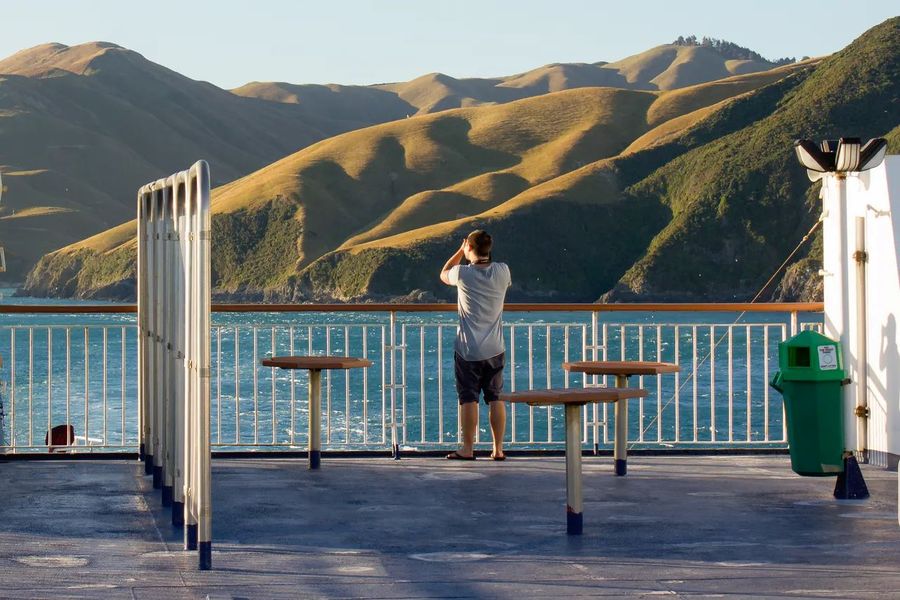
The figures accumulated over her 26-year career speak for themselves. Aratere completed 53,000 Cook Strait crossings and carried five million passengers, 1.5 million passenger vehicles, and 500,000 trucks, all with a crew of just 31 working around the clock in shifts.
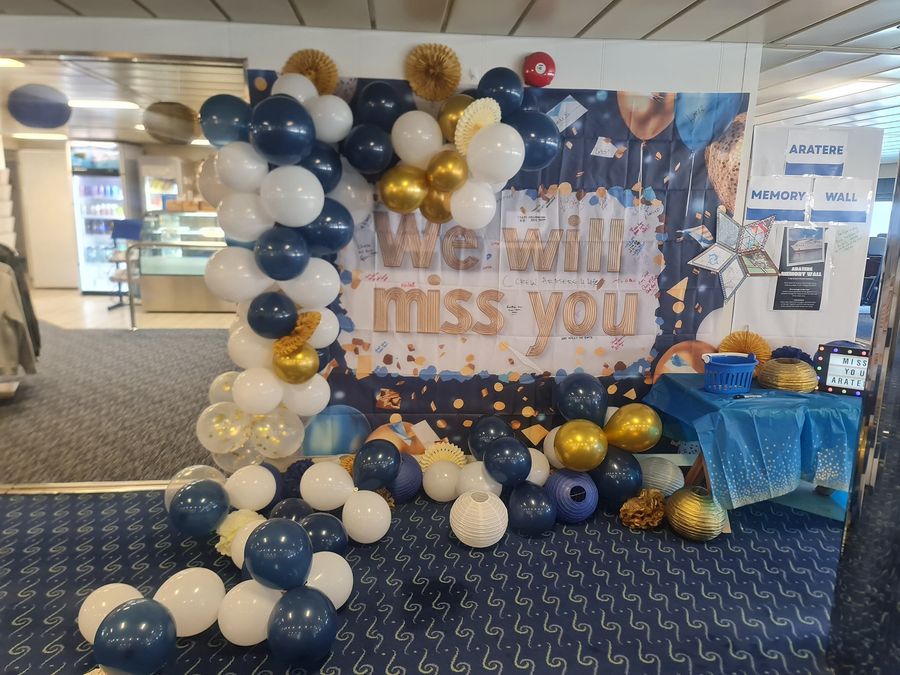
On 18 August 2025, Aratere completed her final scheduled crossing, sailing from Picton to Wellington for the last time. The crew marked the occasion with balloons and cupcakes, some dressed in costume, and the atmosphere aboard mixed celebration with something more difficult to articulate. After she docked in Wellington, her engines fell silent. What comes next remains unresolved. Scrapping, sale, or an extended lay-up are all possibilities, but her working life on Cook Strait is finished.
The legacy she leaves behind resists easy summary. Aratere was called El Lemon, detained by safety authorities, and involved in groundings, collisions, and mechanical failures that would have ended a lesser vessel's career far sooner. She was also the ship that carried five million people safely across one of the world's most demanding ferry routes for more than a quarter of a century. Her retirement marks a more particular kind of ending as well. As the last ferry capable of carrying rail wagons directly across the strait, her departure closes a chapter that began with Aramoana in 1962. The tradition of rail ferries on Cook Strait is now paused, and whether it will resume is far from certain.
For now, Aratere sits in Wellington, her 26 years of service inscribed in the wake she leaves behind. She was rarely straightforward, never especially quiet, and precisely what her name always promised: a quick path across the sea.