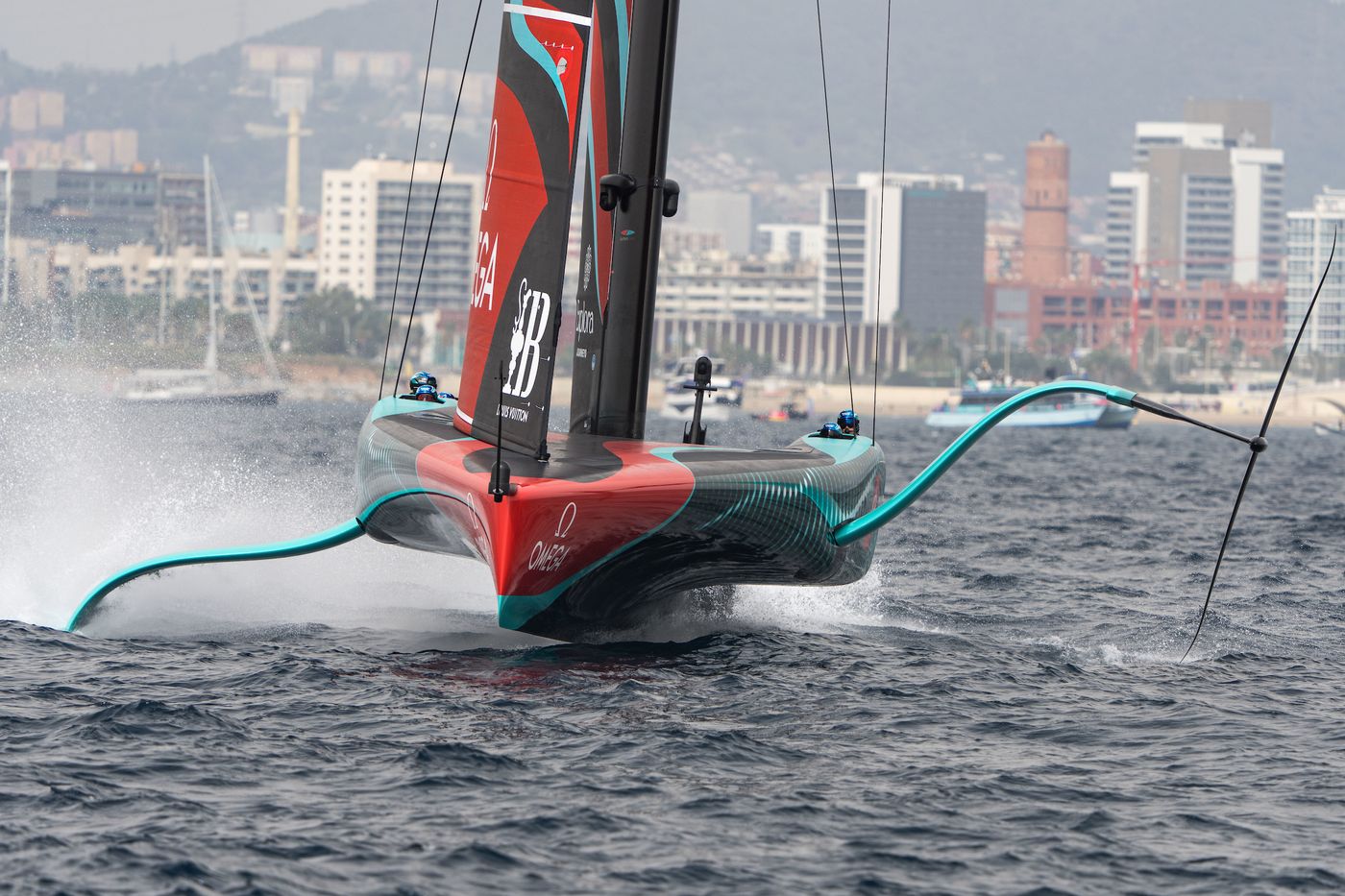
Two years out from racing in Naples, the governing bodies of the Louis Vuitton 38th America's Cup have released the definitive AC75 Class Rules and Technical Regulations. Published on 9 September 2025, these documents define precisely how teams must build their boats and organise themselves for sailing's most prestigious competition.
The Class Rules V3.01 run to 105 pages of dense technical language, but the underlying ambition is straightforward: deliver racing that is fairer, more affordable, and more environmentally responsible, without sacrificing the spectacle that makes the America's Cup compelling. The key changes are sweeping. Hulls from the previous Cup must be carried forward rather than replaced. Cyclors are banned, with battery systems taking their place. Crew numbers drop to five, with a mandatory female sailor on board. And for the first time since Valencia 2007, a guest racer will be present during official competition.
For every team in the fleet, these regulations demand a fundamental rethink of how they design, train, and race.
Hull reuse: the most consequential decision
The most striking single rule is the prohibition on building new AC75 hulls. Teams must campaign hulls launched either during the Auckland cycle in 2021 (AC36) or at Barcelona's AC37. Rule 9 of the Class Rules sets out the requirements in exhaustive detail. Hull geometry and flotation specifications are defined precisely, with blueprints required as IGES files and reference points and bulkheads exactly located. Tolerances leave virtually no margin: deviation on the hull lower cannot exceed ±5mm, and the overall enclosed volume must reach at least 60m³.
The rationale is cost containment, and Emirates Team New Zealand chief designer Dan Bernasconi put the case plainly in the release: "We analysed all of the hull shapes used in Barcelona at AC37 and recognised that the speed differences purely of the hulls were minimal. All of the gains were in foils and systems; therefore it made absolute sense to concentrate design time into those areas of development and re-use the hulls."
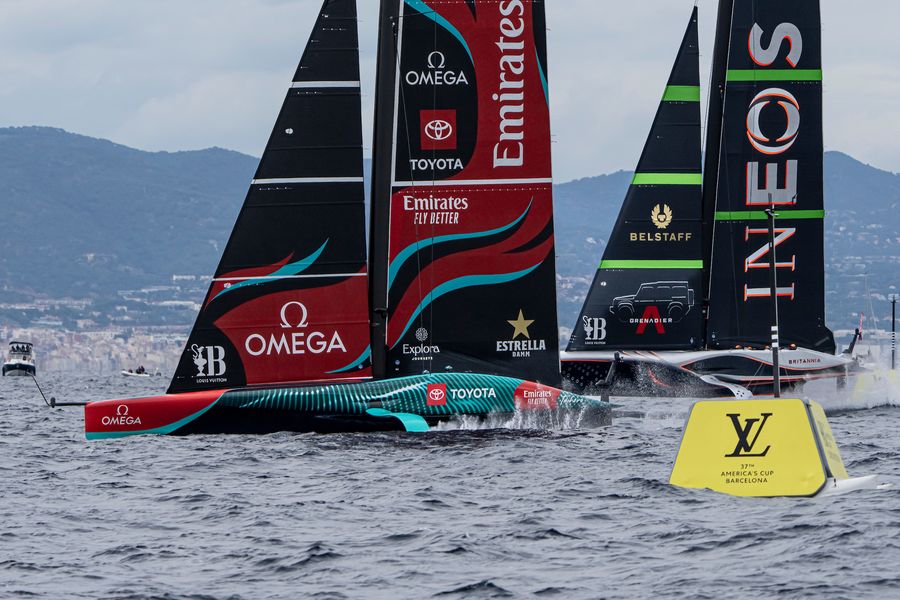
For established teams such as Team New Zealand, Luna Rossa, and INEOS Britannia, the rule is a natural advantage: their hull platforms are already proven. Newer challengers face the harder task of adapting legacy boats quickly and finding performance through other means.
Cyclors banned, batteries in charge
If hull reuse represents the financial logic of the new rules, the removal of cyclors is their cultural turning point. The leg-powered grinders were New Zealand's invention, first appearing in Bermuda in 2017, and they went on to define the look and physicality of the two Cups that followed. Under Rule 23, they are finished.
All power for moveable systems must now come from stored energy, specifically one-design battery units forming each boat's primary power bank. These will drive foil cant systems, wing flaps, rudder trim, and sail handling actuators.
The implications for crew selection are significant. Raw athletic output is no longer the deciding factor; instead, electronic management systems become central to performance. Teams will gravitate toward sailors who are lighter, tactically astute, and capable of managing multiple roles simultaneously, rather than elite endurance athletes built for generating horsepower.
Bernasconi sees the change as a positive development: "Another big change will come in the electronic management systems, now that cyclors have been outlawed, but the result will be even closer racing and a sustainable event overall."
Five crew, one female
The crew complement has been trimmed to five, and Rule 39 of the Class Rules makes it mandatory that at least one of those sailors is female. The rule creates a direct pipeline from the Women's America's Cup, which is sailed in AC40s, into the main AC75 squads, and reflects a deliberate push toward genuine gender integration at the top level of the sport.
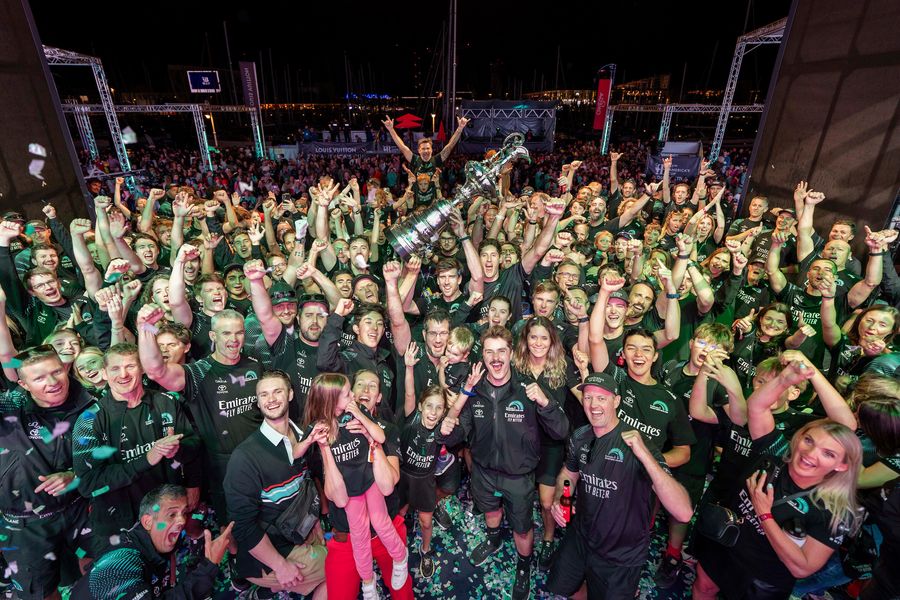
The practical consequences are real. With five crew slots, no role is incidental. Communication, coordination, and positioning become more important than ever, and tactical decisions are likely to involve broader active dialogue across helms, trimmers, and flight controllers rather than resting with a single voice. For syndicates, the obligation to field a female sailor creates both opportunity and pressure. Rotation across a multi-year campaign will be unavoidable, which means development programmes must actively prepare female athletes not merely for the Women's Cup but for the pinnacle event itself.
A guest returns to the boat
Rule 40 revives a tradition absent since Valencia 2007: the guest racer. Each AC75 must carry a designated seat for a non-crew guest during racing, echoing the "18th man" who featured on the IACC yachts of that era. For sponsors, VIPs, and fans, the prospect of racing aboard a foiling AC75 will be a powerful draw.
The guest racer is not merely ceremonial. Rule 6.11 specifies that the guest and their equipment must total no more than 125kg, with ballast added where necessary to hit that figure precisely. Teams must design cockpit spaces that accommodate the guest safely and aerodynamically without compromising how the crew operates. In a class where every millimetre of tolerance matters, managing an additional variable in weight distribution requires genuine engineering consideration.
Recon and transparency
The Joint Recon programme, one of the defining features of the previous Cup cycle, carries through into this edition. From 15 January 2026, once AC75s are cleared for sailing, each competitor must declare observation days, giving rivals' recon crews the opportunity to document what they are seeing. The intention is to reduce the covert intelligence-gathering that has always shadowed Cup campaigns.
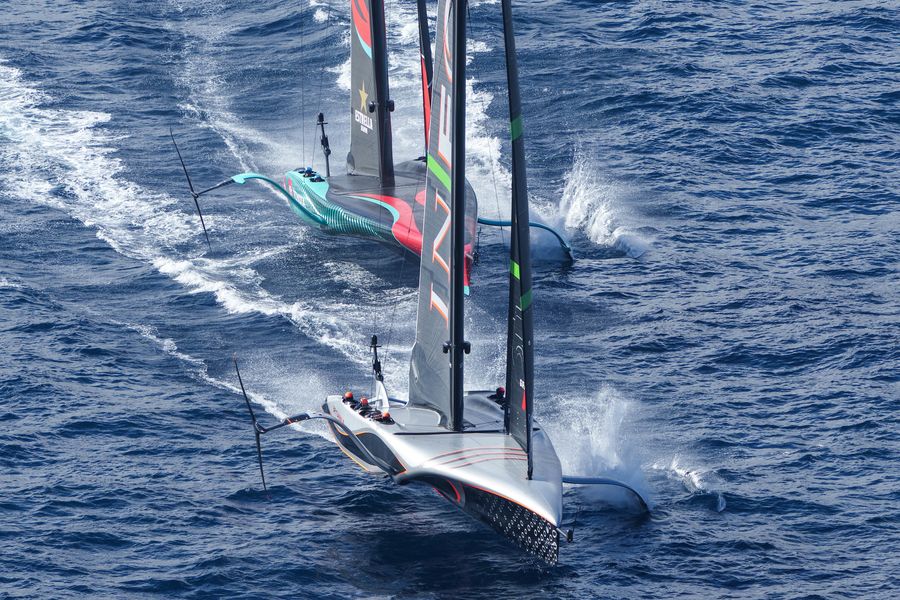
One-design AC40 training sessions fall outside the programme's scope, but every AC75 outing will be subject to scrutiny. For fans and analysts, it provides a rare window into what would otherwise be the most guarded phase of any campaign. Expect photographs, videos, and observation reports to generate sustained speculation about relative performance and design direction from early in the 2026 season.
Materials, mass, and foils
Entire sections of the Class Rules are dedicated to controlling the materials and masses of individual components, deliberately channelling the design race toward areas where it matters most: foils, control systems, and human performance.
Materials are governed by Rule 2, which limits fibre modulus and core materials, prohibits substances including boron and beryllium, and requires certificates for every roll of high-modulus fibre. Rule 3 embeds sustainability requirements into construction, with incentives for recyclable moulds and lifecycle analysis of hull builds. Mass is managed through Rule 6: the complete yacht assembly must weigh 6435kg, each foil wing must fall between 550 and 580kg, the jib is fixed at 54kg, and ballast must be precisely adjusted to meet target values throughout.
These rules leave little room for creative interpretations. The performance differences between teams will emerge from foil refinement, the sophistication of control systems, and the people sailing the boats.
Sustainability as standard
Environmental responsibility is no longer a marginal concern in the Class Rules. Chase boats must be at least 10 metres in length, capable of 35 knots, and powered by batteries, hydrogen, or biofuels. Hull tooling is subject to lifecycle sustainability scoring, with recycled or low-energy fibres preferred. Teams are also required to cooperate on strengthening sustainability provisions for AC39, covering end-of-life disposal and emissions transparency.
For an event of global scale under constant public scrutiny, these measures carry both symbolic and operational weight. Chase boat fleets in particular will need to be restructured to meet the new requirements.
AC40s as the training ground
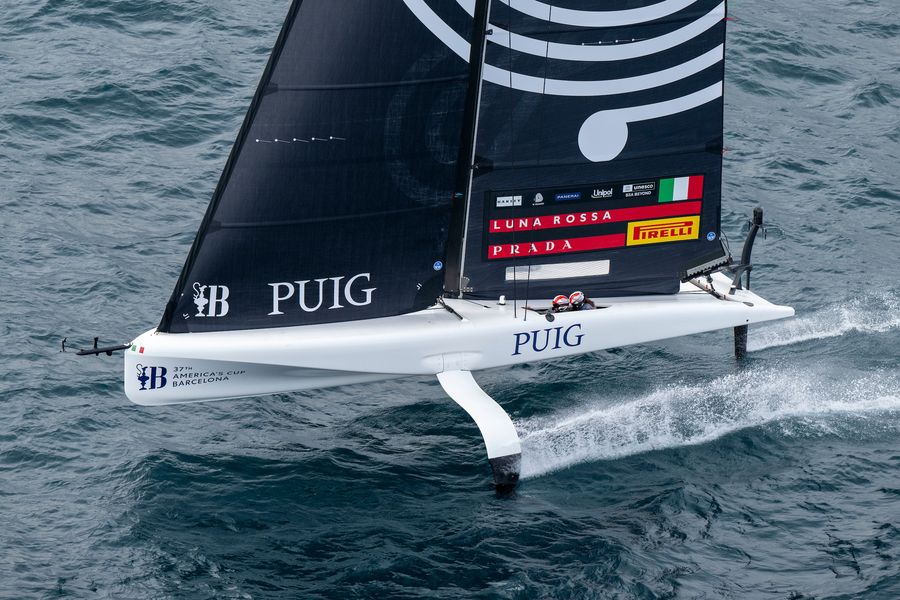
Until AC75s are cleared for sailing in early 2026, teams will centre their preparation on AC40s. Each syndicate may operate two boats in preliminary regattas, with one crewed by Youth and Women sailors as set out in the Protocol. This arrangement keeps talent pipelines active while giving main squads competitive race time. For design teams, the AC40 provides a useful testbed for refining systems and sail-handling approaches that can later be scaled to the AC75.
What these rules add up to
Read together, the regulations represent a clear shift in the Cup's philosophy. By neutralising hull differences, the rulemakers have moved the contest onto foils and racecraft. By removing cyclors and shrinking the crew to five, they have placed a premium on communication, tactical intelligence, and systems management over physical power. By mandating a female crew member, they have made inclusion a structural feature of competition rather than an aspiration. And by bringing in guest racers alongside the recon programme, they have created new connections between the event and the people watching it.
To a casual observer, the AC75 will look much as it always has: a foiling monohull moving at extraordinary speed across a racecourse. Inside the cockpit, the dynamics will be fundamentally different.
Hull development is frozen. Cyclors are gone. The design battleground has been deliberately narrowed, and teams must now direct their resources toward foils, control systems, and the integration of five crew members who each carry more responsibility than before. For Emirates Team New Zealand, who built their reputation on systems innovation rather than hull design, this is familiar ground. For their challengers, closing the gap in exactly those areas will be the defining challenge of the campaign.
With Naples 2027 approaching, the 38th America's Cup looks set to reward intelligence over expenditure, cohesion over brute force, and careful engineering over theatrical gestures. If the rules achieve what they set out to do, the racing will be the closest the Cup has ever seen.