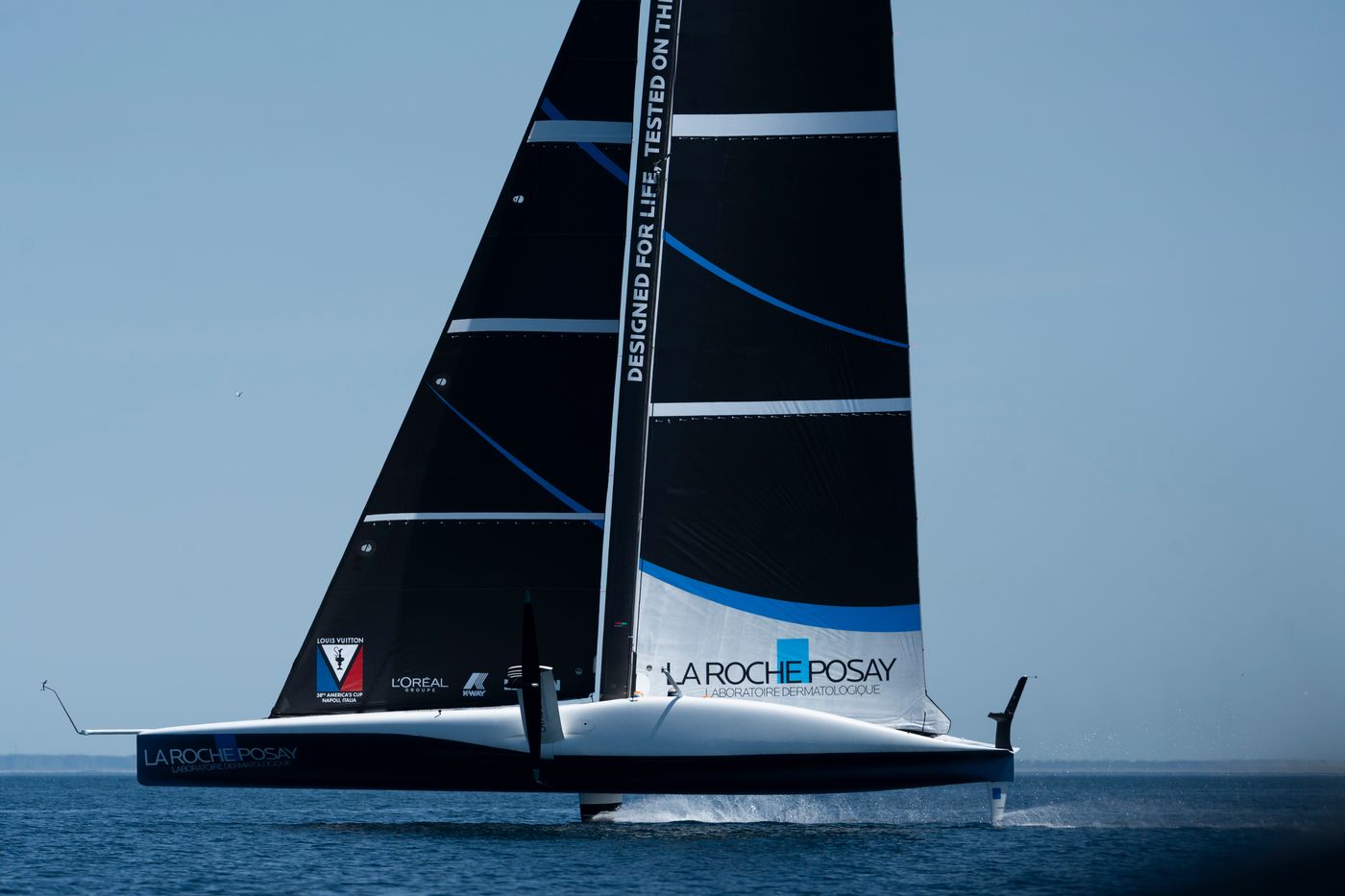
On Tuesday 7 July, during a training session off Lorient, La Roche-Posay Racing Team's AC75 rolled onto its side following a systems failure. The crew were unharmed, and the boat was towed back to the team's base where specialist technicians carried out a full series of checks.
Antoine Carraz, Technical Director of La Roche-Posay Racing Team, has described how the incident unfolded, the condition of the boat, and what it means for the team's sailing programme.
"A systems failure caused a loss of control at low speed, resulting in the boat rolling onto its side," Carraz said. "The team on the water immediately implemented the established safety procedures. The boat was then righted, secured and returned to our operational base."
Carraz pointed to the new rules as a contributing factor. The Protocol for the 38th America's Cup requires the foils to be approximately 400 kilograms lighter, and that change has altered how the boat behaves at low speed.
"With lighter foils, there is less resistance to the boat rolling. The AC75 is therefore more sensitive to instability during acceleration, deceleration and transitional phases. In such situations, its behaviour can be closer to that of an AC40, which is lighter and more responsive."
Sailors must now build a new set of reference points, Carraz said, and Tuesday's incident gave them a particularly tangible learning experience.
Initial inspections found the structure intact with no major damage identified. Water did enter the boat, causing the batteries to heat up, though neither the structure nor the interior was affected. A number of electrical components were damaged by the water ingress.
"We want to take the necessary time to understand the precise sequence of events, inspect every system and implement any improvements that may be required," Carraz said. "There would be no benefit in rushing the process."
The team had five sailing days remaining in the current training block, which they will no longer be able to complete. Those days will be made up either during the August session or later in the autumn, within the maximum allowance of 45 sailing days in 2026. In the meantime, the sailors will work on the simulator and analyse data gathered since sailing resumed.
Carraz acknowledged that incidents of this nature are part of operating boats of such complexity, and that they may become more frequent given the lighter foils. Drawing every possible lesson from the experience is what matters, he said.
"Our safety procedures were tested in real conditions, and the team responded with great composure. Everyone understood their role and carried it out effectively. Ultimately, this experience has strengthened our confidence in the team and in our collective ability to deal with situations of this kind."