A pair of fuel tanks and a set of bright yellow leggings proved to be the difference between life and death for three cray fishermen who spent roughly seven hours in the water after their vessel capsized off Tolaga Bay.
Skipper Nicholas Destounis, second skipper Blake Powell, and deckhand Aaron Bastion were aboard the commercial fishing boat Sidetracked when it became entangled in a craypot line. The vessel was washed onto a reef, waves broke over the hull, and within moments Sidetracked had rolled over and filled with water.
Destounis later described how little time they had to react. Although the boat carried the required lifesaving gear for a commercial vessel, the capsize happened so fast that none of the three men could reach it. What they did manage to retrieve were two fuel tanks that floated free when Sidetracked went over. Destounis lashed them together using a length of rope he happened to have on him, giving the three survivors something to cling to.
"We eventually got clear of the reef and picked up some flotation devices, which were two fuel tanks," he said.
The men were initially scattered but gathered together and began trying to paddle toward Marau Point. Wind and tide worked against them throughout. Conditions kept pushing them down the coast and out toward open water, and despite paddling hard for hours, progress was minimal.
"So it was blowing us out to sea and we were trying to paddle against it. But we kept paddling trying to get closer for seven hours and we just end up in a straight line rather than getting blown further out to sea," Destounis said.
An attempt to reach a nearby island came to nothing when the current carried them past it. By the time rescuers found them, the three men were placing their hopes on drifting close enough to the southern end of Tolaga Bay to reach shore.
Among the first assets to reach the area was an RNZAF P-8A Poseidon, whose crew had been on a routine training flight when the search became very much a real one. Destounis had been wearing yellow leggings, and when the aircraft drew near, the men put them to use.
"Once they got closer, [we] waved the yellow leggings in the air, and we were spotted," he said.
Flight Lieutenant Pilkinton, speaking after the rescue, confirmed the brightly coloured item had made a genuine difference to the crew's ability to locate them. The aircraft then coordinated with the rescue helicopter, which was on scene within minutes and dropped smoke markers into the water, allowing Coastguard vessels to home in on the position quickly.
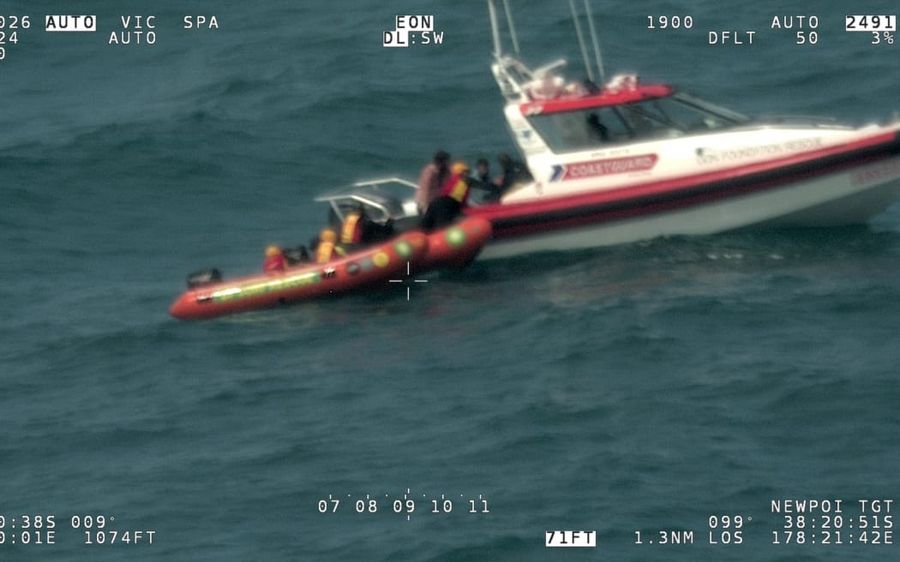
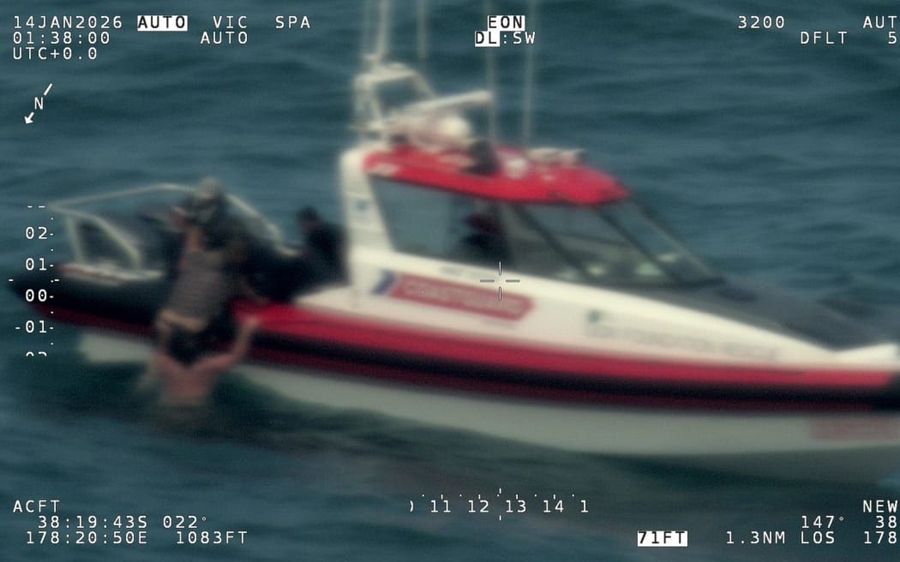
The three men were pulled from the water by Coastguard volunteers, supported by three Surf Life Saving IRBs, and brought ashore at Tolaga Beach. The physical toll of seven hours in the water was immediately apparent.
"Once I got onto the rescue boat, I just had to lie down. I found it hard to stand up. My legs were like jelly," Destounis said.
Family, friends, and rescuers were waiting on the beach when the men arrived, and the group was transported to Gisborne Hospital shortly after. Destounis described the reunion as emotional, with tears and hugs all round.
"We certainly felt as though we were wanted," he said.
The financial consequences of the capsize are significant. Fishing aboard Sidetracked is Destounis's primary source of income, and the years leading up to the accident had already been punishing. Covid, cyclones, and problems caused by forestry slash had stripped the operation of meaningful income over an extended period.
"We've had no significant income for five years and we were hoping that we could get something done in this one," he said. "It didn't start the way we wanted."
Sidetracked has since been recovered, and Destounis has his sights set on returning to the water and rebuilding his business. Getting the boat rebuilt or replaced, however, will come at a high cost.