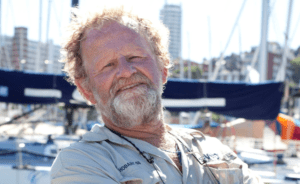
Ron Given left an indelible mark on the boating world. When he passed away in 2023, New Zealand lost a designer whose influence on multihull development stretched back more than half a century. He is perhaps best remembered as the creator of the Paper Tiger catamaran, a design famously roughed out on the back of a Weet-Bix packet, but his portfolio ranged far wider than that. Racing machines such as Split Enz, bluewater cruisers, and displacement powercats all bore his hallmark: an insistence on efficiency, seaworthiness, and making intelligent use of materials.
The Econocat grew directly out of that thinking. Given recognised that many sailors of advancing years still felt the pull of the water but had grown weary of wrestling with sails. His response was a displacement powercat, modest in engine size, generous in comfort, and frugal enough at the fuel pump to make long passages genuinely affordable.
Craig Partridge understood that appeal immediately. He had already delivered one of Given's T11 powercats to New Caledonia back in 2010, and he knew exactly what he wanted from a cruising boat. "I didn't want a planing boat, and I didn't want outboards," he recalled. "I wanted something cheap to run, big and comfortable, and really good in a sea way — a good sea boat."
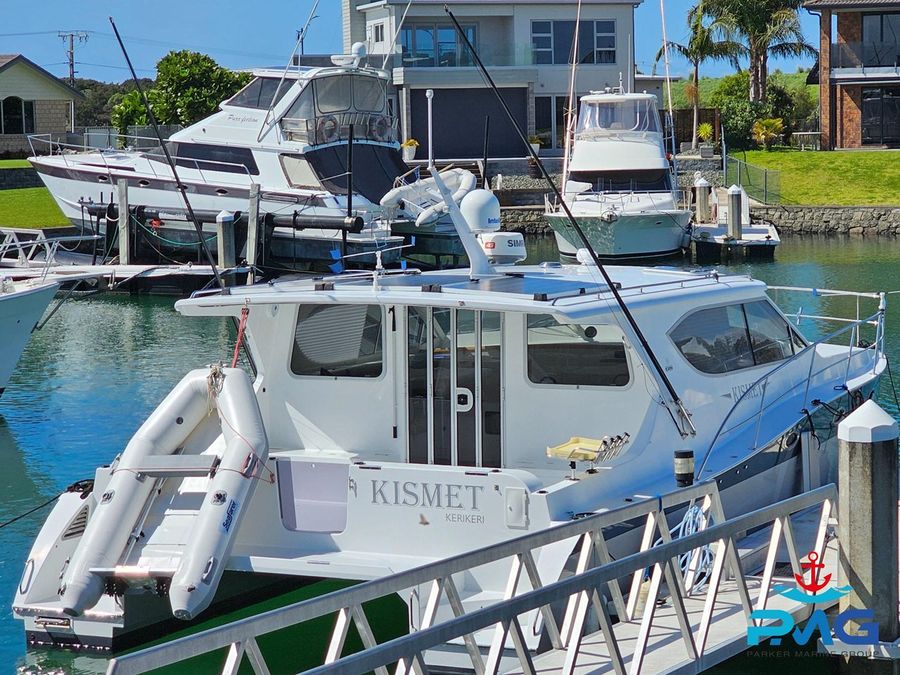
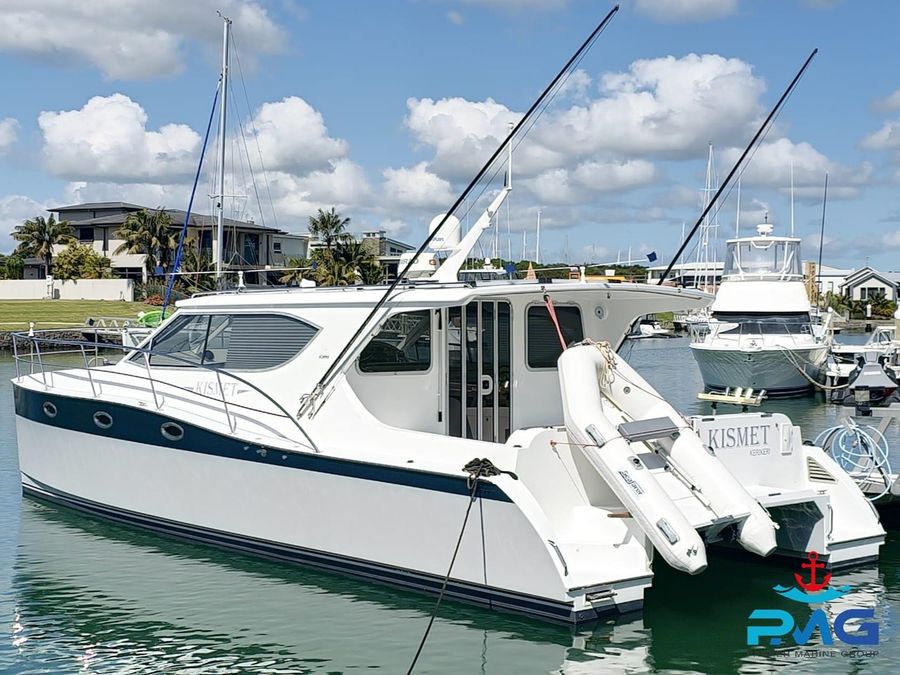
Kismet is the boat that answers that brief. Measuring 10.8 metres in length with a 5 metre beam, she carries the proportions needed to deliver genuine stability and a spacious interior without becoming unwieldy to handle. Her hulls are built from a composite blend of ply, foam, and fibreglass, with carbon reinforcement in critical areas to add strength without adding unnecessary weight.
Weight discipline sat at the very core of Given's approach to design. "You have to think aircraft," he once said. "If it's too heavy, you've lost the plot. Then they take too much horsepower, and use too much fuel." Kismet honours that principle, extracting strong real-world performance from relatively modest machinery.
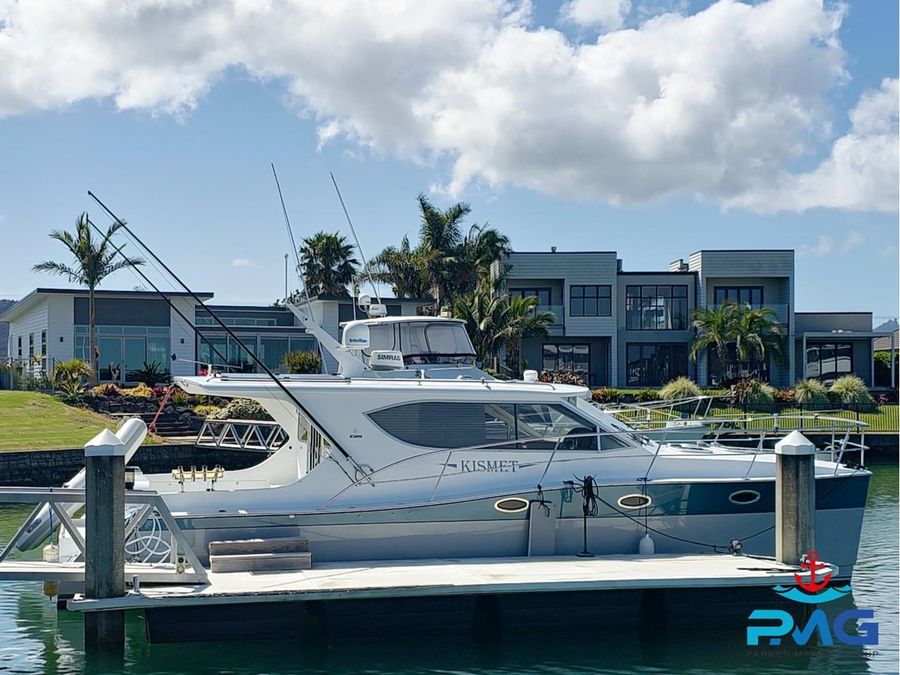
Power comes from twin 87hp Lombardini diesels fitted with sail-drives. At a comfortable cruising pace, they push Kismet along at around 14.5 knots while consuming as little as 0.55 litres per nautical mile per engine. This is not a boat built to chase other vessels across the bay; it is built to cover ground steadily and sensibly, without the fuel bills that punish less considered designs. With 800 litres of tank capacity and just 286 hours on the engines, she remains a very young boat by displacement-cruiser standards. To put her sea-keeping ability into context, it took just two days and 18 hours to deliver the 12 metre cat 936 miles to Noumea.
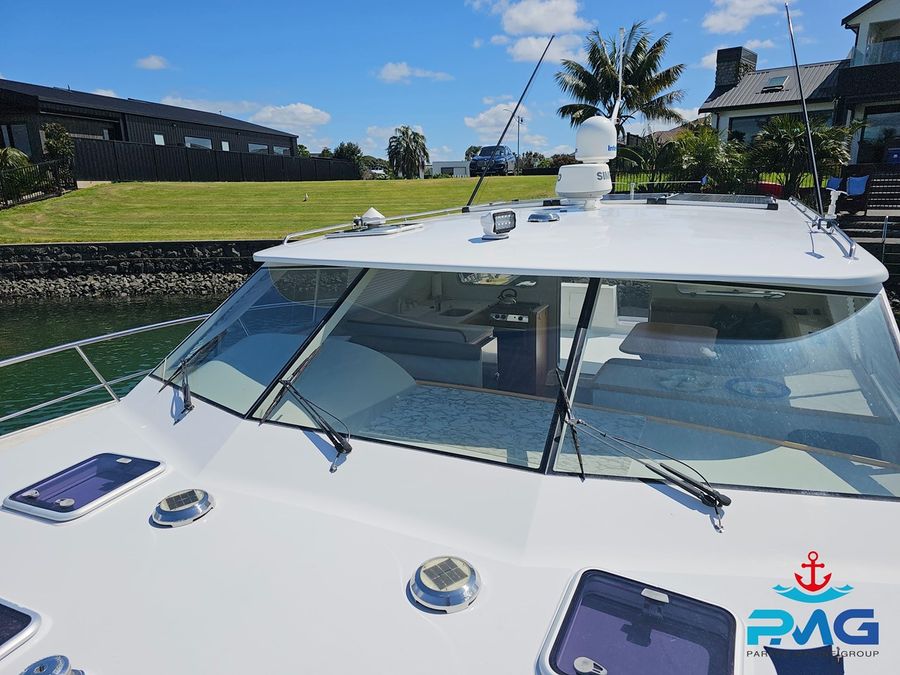
Below decks, Kismet offers the kind of environment that makes extended time aboard genuinely pleasant. Each hull contains a comfortable double cabin served by its own ensuite, giving couples or guests a degree of privacy that open-plan layouts simply cannot provide. The bridgedeck saloon brings together the galley, the helm position, and a dining table that converts into an additional berth when the situation calls for it. Wrap-around windows running the full perimeter of the saloon let in natural light from every direction and provide unobstructed views whether the boat is running offshore or swinging at anchor in a sheltered bay. European beech trim and practical, hard-wearing flooring complete an interior that looks after itself without demanding constant attention.
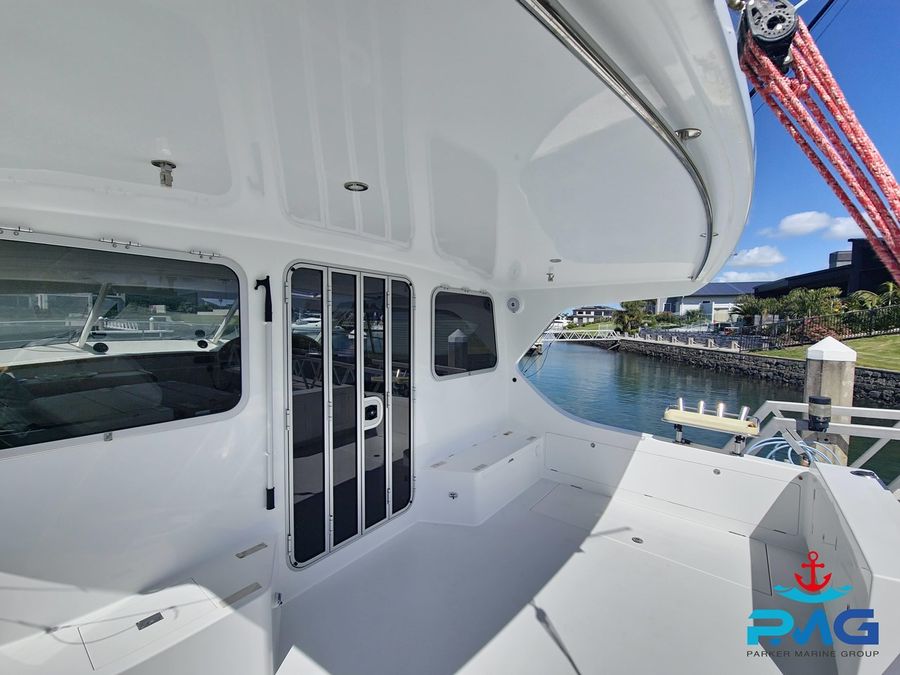
The cockpit has been set up with fishing and relaxed socialising equally in mind. Large hatches fold back to open a direct connection between the galley and the cockpit space, while bi-fold doors reinforce that indoor-outdoor flow. Boarding platforms on each hull, a fold-down ladder, a live-bait tank, and dedicated rod lockers confirm that Kismet was conceived as a serious coastal cruiser with Kiwi priorities firmly in place.
Displacement powercats of this standard rarely surface on the New Zealand market. Kismet brings together Given's formidable design legacy and Partridge's careful craftsmanship in a package that is economical to operate, comfortable on passage, and built to last a working lifetime on the coast. She is also a physical expression of the Econocat concept, a design that was arguably ahead of its time and that looks increasingly relevant as fuel costs climb and the conversation around efficiency grows louder.
What Kismet represents goes beyond her specifications. She is a tangible piece of Ron Given's legacy, shaped by ideas that influenced multihull design across generations. Her economy, her practicality, and her quiet confidence on the water reflect the kind of smarter, better boating that Given devoted his career to pursuing. For the right owner, she offers not only a capable and comfortable vessel but a connection to one of New Zealand boating's most inventive minds.