Wellington's maritime police unit has scaled back its operations, with a 60 percent reduction in hours meaning the service is no longer available around the clock. Officers now respond between 9am and 6pm on most days, a change police say will save money but which critics argue puts lives at risk on one of New Zealand's most treacherous stretches of water.
Geoff Marsland has sailed extensively across the globe, yet he maintains that some of the most dangerous conditions he has ever encountered lie just outside Wellington Harbour. "You leave Wellington you turn right, and you go three miles to the west and there's Kiroroi rip," he said. He knows that stretch of water from personal experience. It was off Wellington's southern shore that his engine filters failed one evening, with two young children aboard and a nor' west building to about 30 knots. He called the Lady Liz, and within twenty minutes the vessel arrived and towed him safely to the wharf. "The next day I cleaned the filters, and I was fine," he recalled.
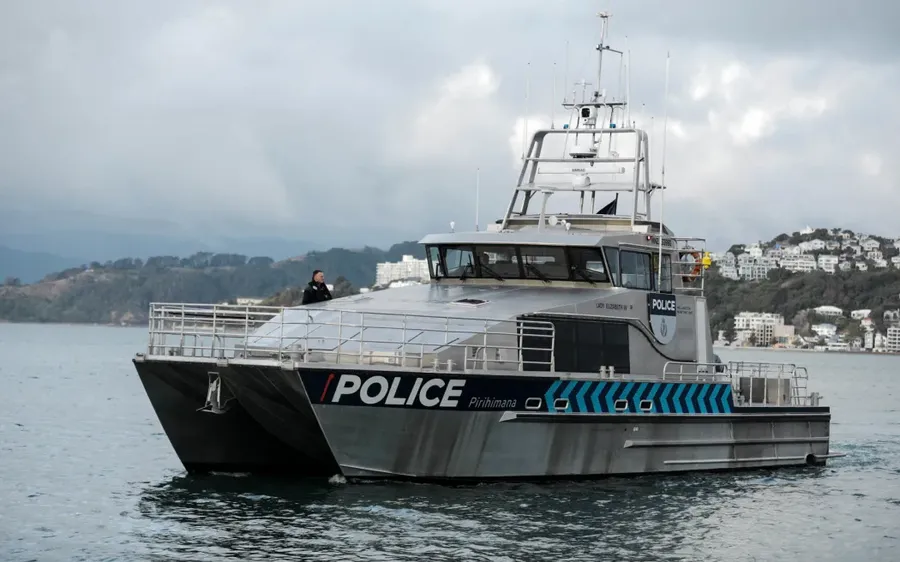
A version of the police boat Lady Elizabeth, nicknamed the Lady Liz, has patrolled Wellington's shores and rescued boaties for over 80 years. Among its most notable operations was the 2006 recovery of diver Rob Hewitt, brother of ex-All Black Norm Hewitt, who had been lost at sea for three days before the Lady Elizabeth crew found him. Marsland said the decision to pull back the police maritime service was crazy. "It's ridiculous, this is Cook Strait and Wellington! Within not long there will totally be casualties," he said.
Wellington Acting District Commander Inspector Nick Thom defended the decision, pointing to operational data gathered over the previous two years, during which the service had been needed overnight just once. "We looked at a range of data and when the Liz was being deployed to incidents, and the main demand picture has told us it's that 9am to 6pm time," he said.
Not everyone within the unit shares that confidence. A sworn police officer currently involved with the maritime unit said that when the team is called out, the stakes are almost always life or death, and questioned whether the financial saving justifies the risk. "There're managers within the organisation who go 'well look, we are willing to wear the risk.' And it's like 'well, are you? Are you going to stand up in front of the media and the public and say 'yep, that person died because we saved $90,000 this year,'?"
When staff within the maritime unit were consulted on the proposed changes, their response was overwhelmingly negative. The decision report summarised their feedback: "Staff expressed concern that the proposed changes would negatively impact public safety and erode trust in police." It went on: "The perception that the unit may be unavailable during emergencies could damage its reputation and reduce community confidence." Several officers indicated they would consider leaving the maritime unit or the police entirely because of the changes.
Thom acknowledged the concerns raised but concluded they did not override the need to redirect resources. "I would acknowledge the submissions raised a range of concerns but ultimately it's been determined that those concerns are not outweighed by the need to prioritize our resources and where they will have the biggest impact," he said.
Paul Gubb has spent 40 years working commercially on Wellington's water and said he always felt safer on the water knowing the Lady Elizabeth and her crew were there. "When you are a water person, and a lot of Wellingtonians are, this is something we pay for and they can cut something else but don't cut our wharf police," he said.
Outside the new operational hours, search and rescue responsibility shifts to Coastguard. Thom conceded this arrangement carries its own cost, since police are required to pay Coastguard when they task the organisation to respond. Even so, he put the overall annual saving to police at around $130,000. "What the data has told us is there have been 1% callouts for the night standby period over the last 12 months which would indicate its going to be a very low callout percentage for Coastguard," he said.
Coastguard confirmed it maintains 24/7 readiness across the Wellington region, with 70 active volunteers and two dedicated rescue vessels, Reremoana and Spirit of Wellington. A spokesperson acknowledged that the volunteer nature of the organisation does affect how quickly crews can mobilise. "Our crews often leave work, family, study, or other commitments when a call for help comes in, which means our response times may be slightly slower than those of the Wellington Police Maritime Unit." Coastguard nonetheless expressed confidence in its ability to deliver an effective search and rescue response across the region.
Where Coastguard drew a firm line was on the broader policing role the maritime unit has traditionally performed. "We do not carry out any Police work or act as law enforcement of any kind. In this regard, we cannot provide the same operational scope as the Wellington Police Maritime Unit. While we work closely together, our focus is solely on search and rescue," the spokesperson said.
John Bryant spent 24 years in the Wellington police maritime unit, nine of them as officer in charge, and sees the reduced hours as a cut to frontline policing rather than a simple scheduling adjustment. "The history of these constables is that they are frontline police, they wear the blue. They are policeman first and mariners second," he said. He believes Wellington has quietly lost something of real value. "For decades police have [been there], and as a result there are many many people who are alive today because of that level of service."
The current officer within the unit highlighted the breadth of work the crew performs beyond rescue operations. "It's not just search and rescue, we work with customs, and MPI, and the defence force and the local harbourmaster; we've worked with immigration before, mental health... any kind of incident on a ferry or another vessel that requires a tactical response, other agencies won't take tactical teams."
Police have indicated the decision will be formally reviewed in the coming months to assess its real-world impact.