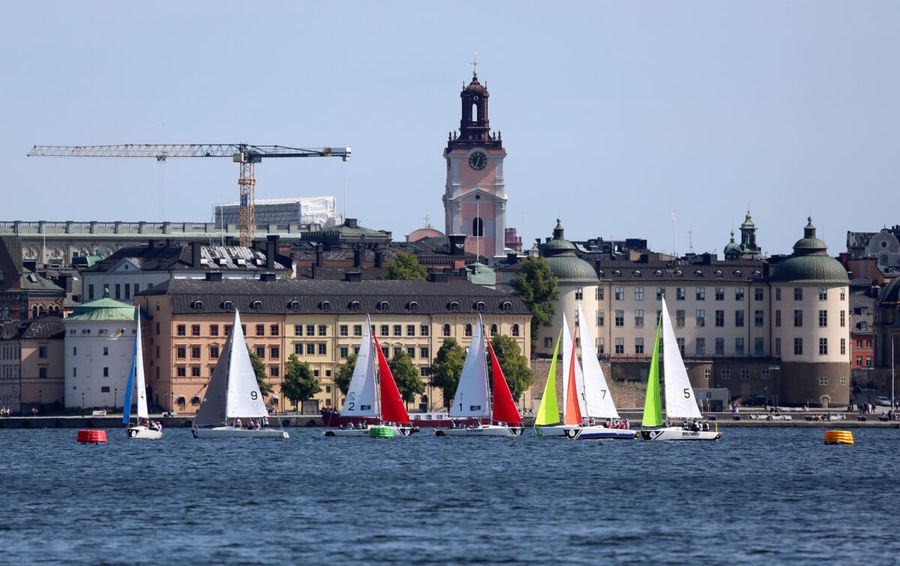
Racing on Riddarfjärden opened with a test of patience. Light winds held the 12 teams at bay through the morning, but as the breeze built the day transformed. The race committee ultimately ran 55 races before calling it done, seven more than their original target of 48.
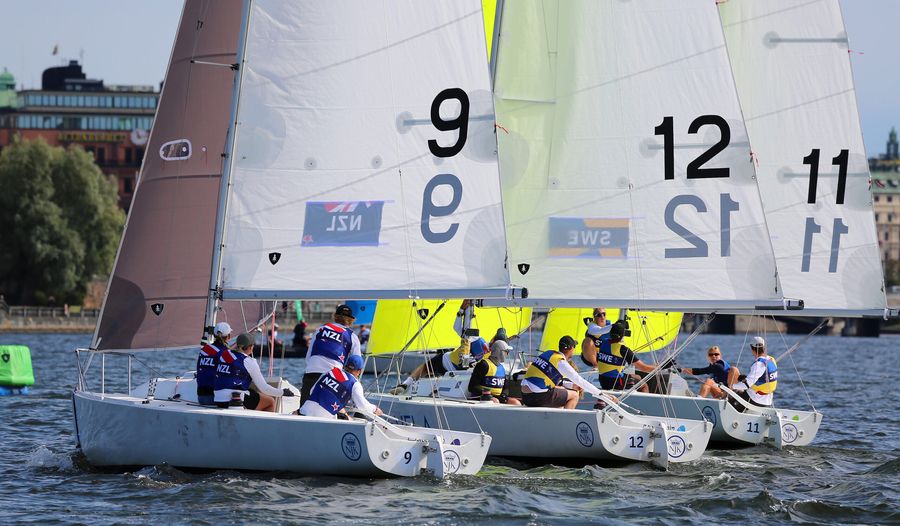
That pace is no accident. Each race lasts eight to nine minutes, with a new start required every four to five minutes and up to three races running simultaneously on the course. The layout is an unusual "digital M" featuring two upwind legs, two downwind legs and three reaching legs, with six mark roundings in total. Project manager Magnus Myrenberg says the design is deliberate. "It's a course that really highlights the tactical side of team racing. There are six mark roundings, and each one presents its own tactical challenge. It creates more situations where teams can be tactically smart."
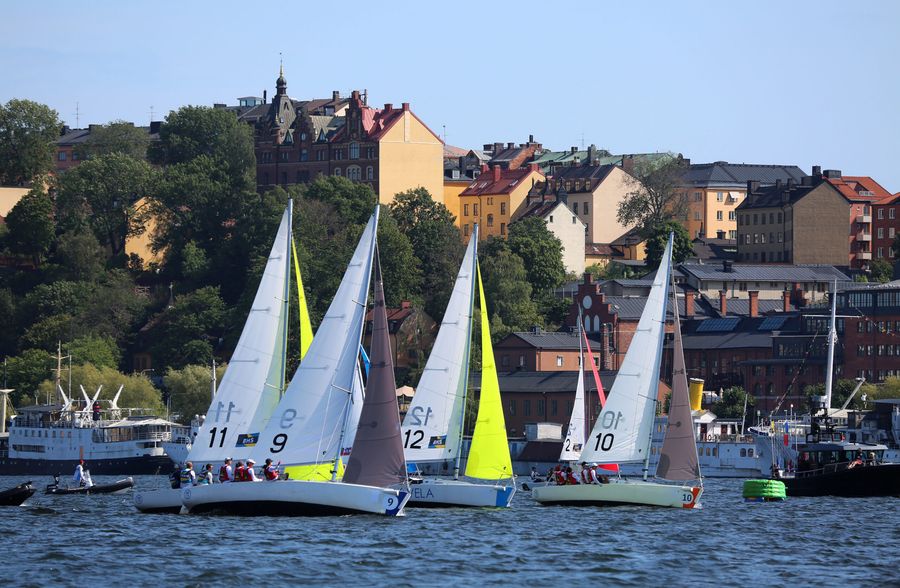
The six turning marks are remotely controlled, moved automatically by the race committee as conditions demand.
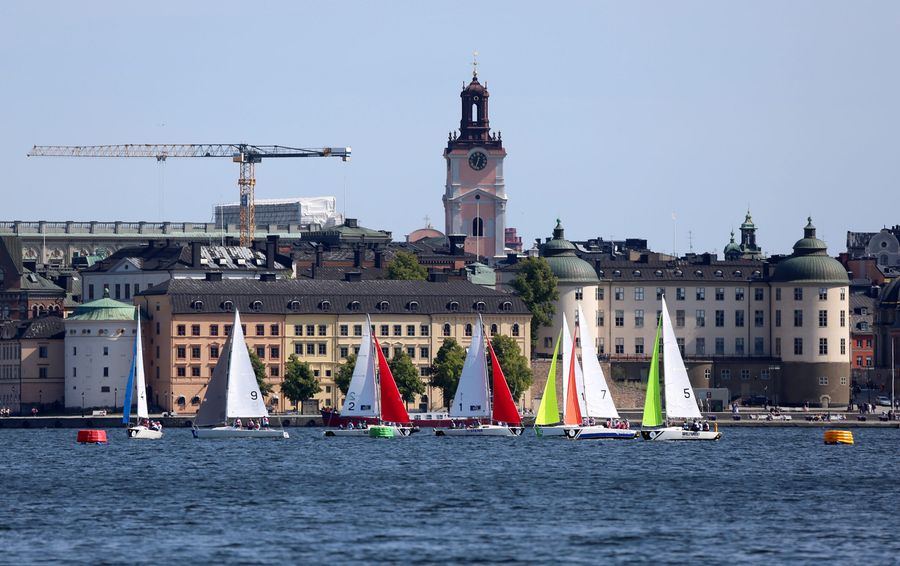
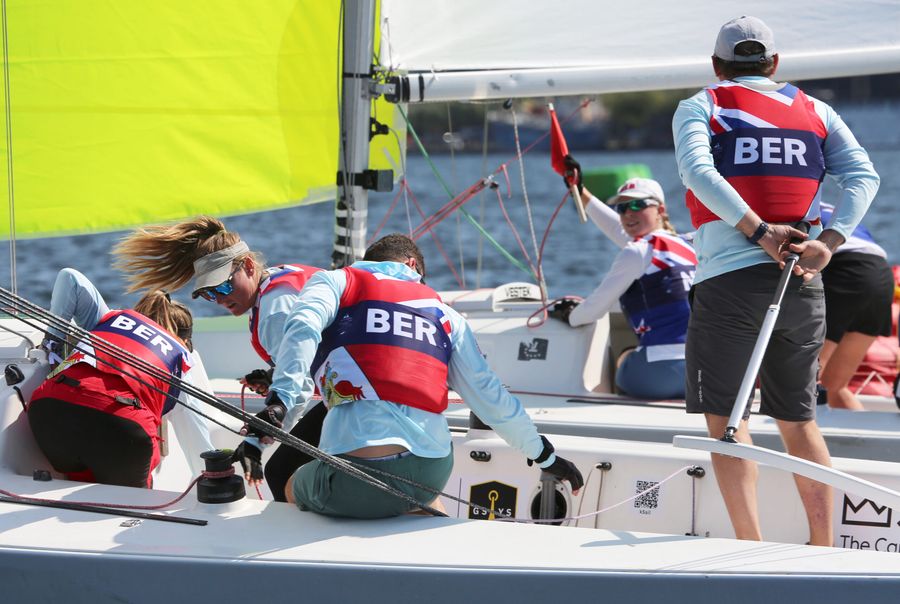
Several races were decided by fractions. Bermuda led Bahamas with ten seconds remaining, only for Bahamas to cross first by less than a second, three of the four boats finishing within a single second of each other. The Sweden versus Denmark match swung back and forth before being settled on the final downwind leg. "We had a communication mistake right at the end, and that's why we lost," said Danish team member Sofie Slotsgaard.
Great Britain featured in a number of the tightest races on the day, including a battle with USA 2 that went down to the wire and an intense win over Ireland. Then the defending champions came back to square the ledger. USA 2 took a later win over GB, close tactical situations at the final mark carrying all the way through to the finish.
The day closed with the only two undefeated teams meeting. USA 1 versus USA 2. USA 1 took it.
Conditions eventually reached close to ideal, temperatures around 25°C, winds of 8 m/s and gusts to 18 m/s. The squalls that produced those numbers had flattened by evening, and the teams still made their sightseeing tour of Stockholm.
Off the water, a sustainability seminar in the Race Village drew representatives from the City of Stockholm, Stena Recycling, Vattenresurs, Voice of the Ocean and the Port of Stockholm. The discussion centred on water quality and the responsible use of water resources, and the context matters: Riddarfjärden sits within the same water system that, after treatment, supplies Stockholm's drinking water. Organisers GSYS have set a high sustainability ambition for the championship and are making that connection plain.
The overall target remains 140 to 160 races across four days. After day one, the committee is ahead of schedule.