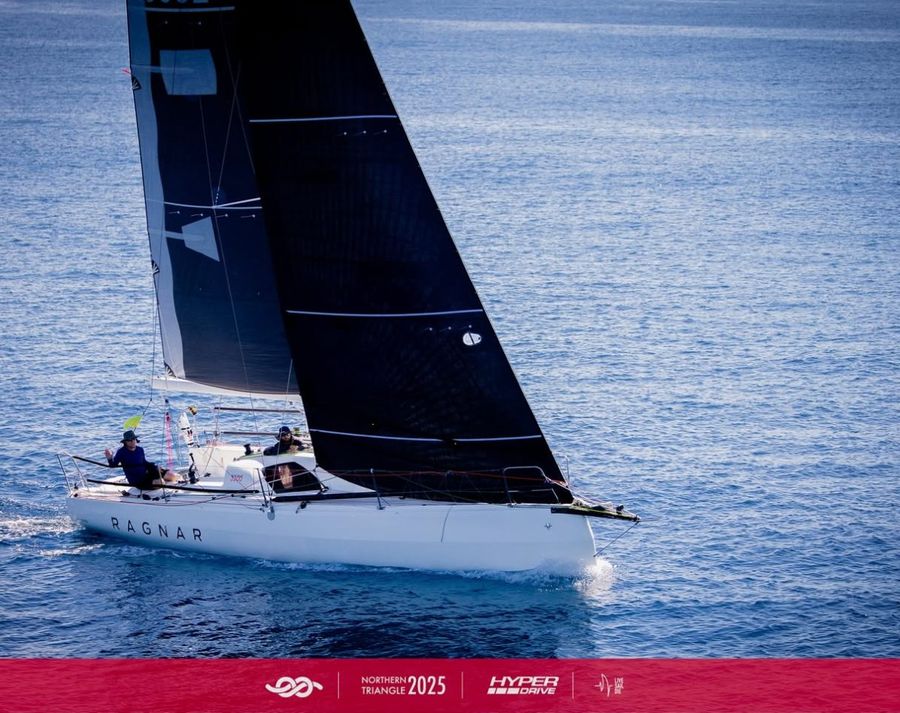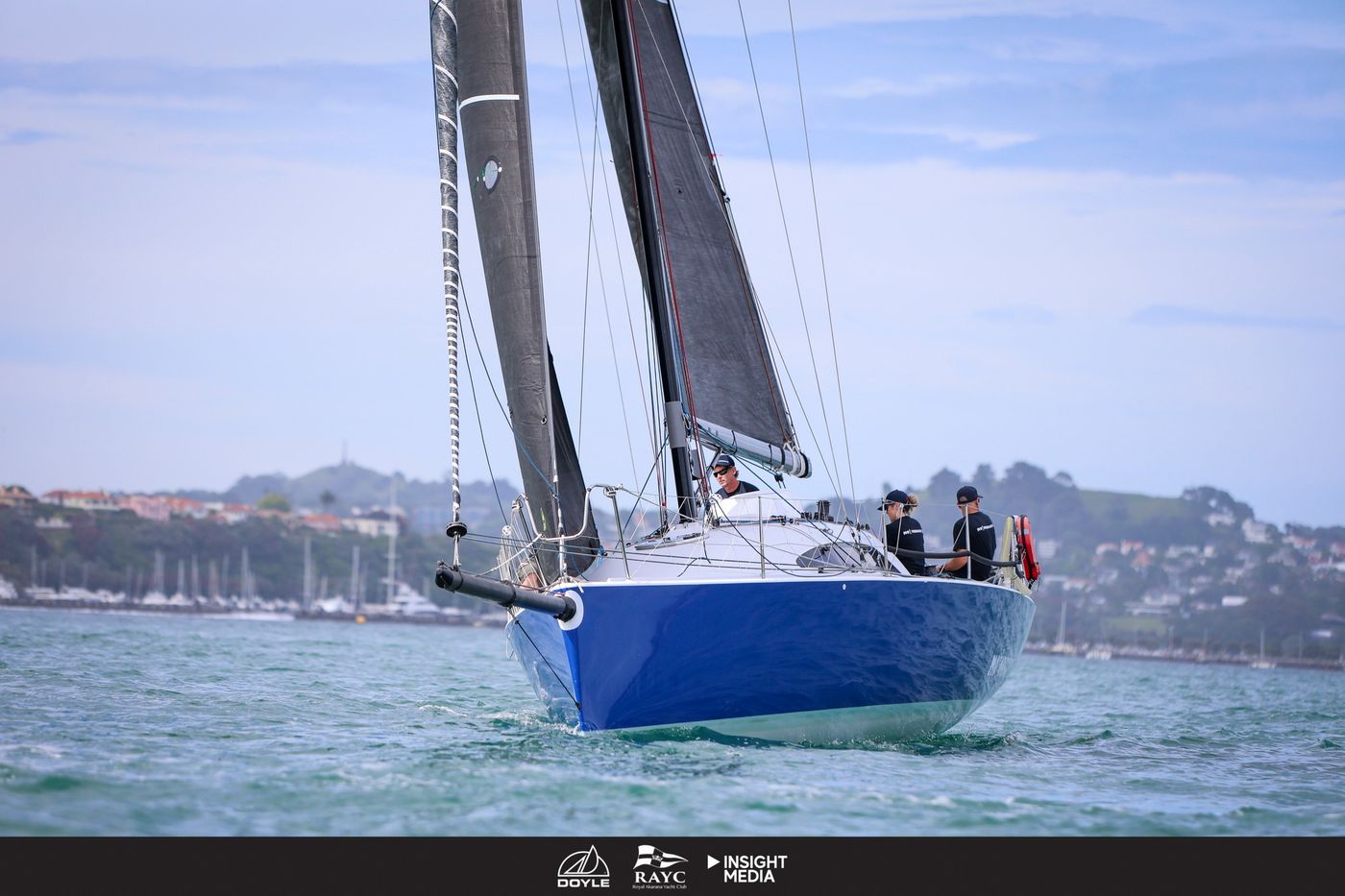
With just three weeks to go, the 2026 Doyle Sails Round North Island Yacht Race is taking shape, defined as much by the offshore miles crews have logged in preparation as by equipment checks and qualification paperwork.
A last-minute entry arrived as registration closed in mid-January, when General Lee Racing joined the fleet. The boat last competed in the RNIs in 2020 under the name Clockwork, winning overall with Steve Mair and Jamie Logan at the helm. Now sailing with a new name, a fresh refit, and Tim Holgate and Cameron Thorpe aboard, the question is whether it can repeat that performance.
Run by the Shorthanded Sailing Association of New Zealand (SSANZ), the Round North Island Yacht Race covers more than 1,200 nautical miles, sailed anticlockwise around the North Island by two-handed crews. It is the kind of race that punishes poor decisions and rewards composure when conditions deteriorate.
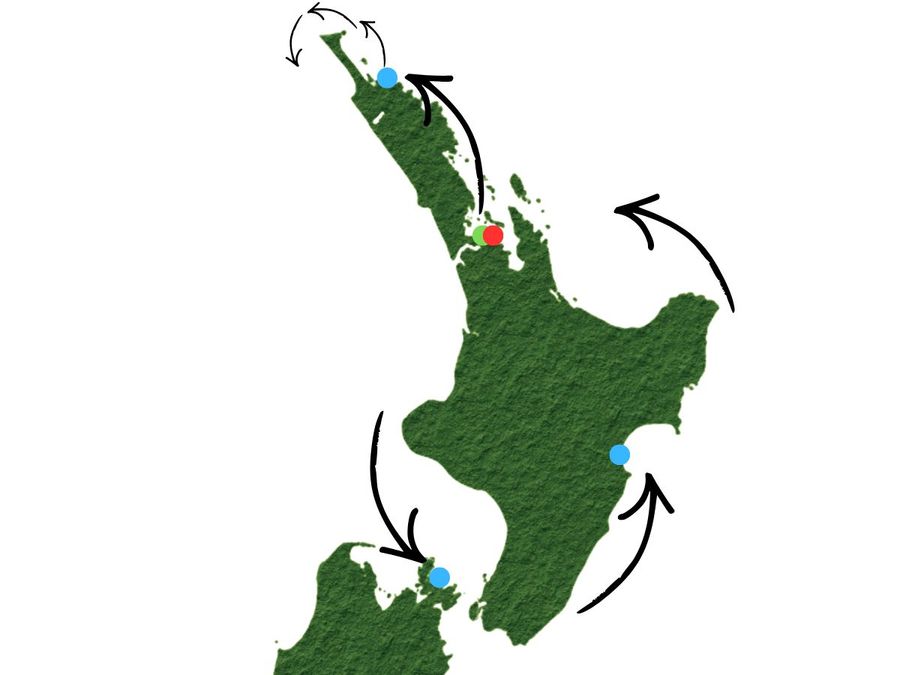
The fifteenth edition gets underway from Auckland's Waitematā Harbour on 28 February 2026. The fleet heads north first, with a scheduled stopover in Mangōnui, the northernmost safe port on the course, before rounding Cape Reinga and turning south down the West Coast. Rather than stopping in Wellington, boats cross Cook Strait to the top of the South Island, then work north up the eastern coastline to a planned stop in Napier, before returning to Auckland via East Cape. For most crews, the race amounts to close to two weeks at sea, punctuated only by brief stopovers to rest, make repairs, and regroup before the next leg.
The fleet numbers 28 boats, fewer than in previous editions, though the smaller field makes decision-making simpler rather than the competition lesser. The quality of preparation teams have brought to the start stands out. Sharon Ferris-Choat from Vixen Racing has been direct about this throughout the build-up. "You cannot fake preparation in this race," she says. "The miles expose everything." Crews have been choosing boats they know well, systems they trust, and partnerships already tested in offshore conditions.
Every entry must complete a non-stop 250 nautical mile passage as a qualification requirement, and the 2025 Doyle Sails Cavalli Islands Race provided the most convenient route for several teams, which goes some way to explaining the strong two-handed turnout this year. Among those who qualified through the Cavalli race are Rowan Smith and Lydia Boyd on the Elliott 10.66 Carpe Diem; Brendan Sands and Ben Roff aboard the Elliott 1050 Kick, who finished 14th overall in the 2023 RNIs; John Seely and Matthew Wilson on the Ross 1066 Higher Ground; Ryan McCready and Andrew Child on the Ross 9.1 Physical Favours; and Bruce Gault and Craig McMillan on the Davidson 52 Whichway, which placed fifth overall in 2023.
Other crews have taken a different path. Some complete the Northern Triangle, a roughly 510 nautical mile loop from Auckland to Mangonui, across to Tauranga, and back to Auckland. Others accumulate the required mileage through a series of longer SSANZ events.
One crew that turned their qualifier into something considerably more extensive is Damon Jolliffe and Josh Tucker aboard Motorboat III. Fresh from taking line honours in the Doyle Sails Cavalli Islands Race with a full crew, they returned to Auckland, loaded the boat with food and gear, and headed straight back out, this time just the two of them. The goal was to complete the required 250-mile non-stop qualifier with the same two crew who will sail the Round North Island. Tucker brings considerable experience to the partnership, having completed five RNIs, while Jolliffe has sailed four, and together they have already finished two. In practice, the passage evolved into a proper shakedown, zigzagging through the Gulf and north toward Little Barrier as the pair worked through new sail plans and put the boat's recent upgrades under pressure.
Sharon Ferris-Choat and Taylor Edwards took a different approach, using their trans-Tasman return passage from the 2025 Rolex Sydney to Hobart to build qualifying miles aboard Vixen Racing ahead of their first RNI. The opening 24 hours were hard upwind work, conditions not unlike the Sydney to Hobart itself, before the passage settled. Sailing out alongside the Globe 40 fleet added early intensity, with close racing through the first day. A developing high forced an early move east to sidestep prolonged calms. From there, the focus fell on refining shorthanded systems and flexible watch schedules. The highlight came at Cape Reinga, where flat water and a rare downwind run past the Three Kings under spinnaker rewarded the effort.
Whatever the qualifying route, the destination is the same. Both sailors must hold current Sea Survival certificates, with at least one carrying an offshore First Aid qualification. Mandatory equipment checks, including AIS and VHF tests conducted twenty miles offshore, form part of a deliberately demanding list. The requirements exist for good reason. Once the race begins, easy exit points are scarce.