A leg that demanded everything
Leg 2 of the 2026 Doyle Sails Round North Island Two Handed Yacht Race covered nearly 480 nautical miles from Mangōnui to Motuara Island in Queen Charlotte Sound, and it tested all 26 crews across conditions, strategy, exhaustion, and a finish line that kept shifting on the leaderboard.
The leg got away on Monday at 9am, with Explore Racing holding the early lead after the first hour. Motorboat III sat close behind, Perfect Storm third. Winds of 15 to 18 knots from the south southwest made the opening hours look almost benign. The sea state was short but manageable, and crews could be forgiven for thinking the hardest work lay ahead.
It arrived sooner than expected.
The defining moment came as the fleet rounded the top of the North Island on Monday afternoon. Two clear options emerged: push west into the Tasman, carry more angle and look for pressure, or hug the coast, accept a shorter route, and hope the inshore breeze held. Explore Racing went wide. Motorboat III chose the tighter, coast-hugging lane. The bulk of the fleet followed Explore Racing into the Tasman. That single tactical fork shaped everything that followed.
Behind those two leading boats, High 5, Whichway and Vixen Racing formed a chasing cluster through Monday afternoon. Further back, the fleet spread across a broad band of sea, each crew committed to their read of the conditions with no certainty about which lane would prove right. The tracker made compelling viewing. Neither option looked like a clear mistake, which meant neither looked like a clear winner either.
Monday night dismantled any remaining sense of comfort. Winds pushed above 30 knots, with gusts reaching 37. The sea state built quickly and stayed difficult. Sailors reached for words like "lumpy" and "bumpy" to describe it, which seems entirely fair for a fleet managing short-handed offshore racing in the dark with no one to share a watch.
The following days turned into a long, patient chess match down the west coast. Motorboat III held an advantage on elapsed time at various points, its tighter coastal line paying off when the breeze shifted or the offshore runners slowed. Explore Racing looked stronger at other times as the fleet worked south and the western angle paid. The handicap picture stayed equally fluid, particularly in the smaller divisions where consistent, well-managed sailing over a long leg earns its reward in corrected time.
Marc Michel from Niksen captured the character of that middle phase precisely, describing the opening stretch as "tough both with conditions in first 24-36 hours (wet and tough physically)" before things became "very much high stakes poker with weather and tactics now as we play snakes and ladders with the leading pack as we approach Taranaki." Survive first. Outsmart second. That was the shape of this leg.
By Thursday morning the picture had clarified, but not entirely settled. Explore Racing was furthest south and looking like the likely line honours winner. Motorboat III remained within striking distance. High 5 appeared set to finish before midnight. On PHRF, Kick led overall but with enough sea still to sail that nothing was locked away.
The finish at the front delivered. Explore Racing, the Elliott 50 campaigned by William Goodfellow and Jesse Turner, took line honours in 3 days 5 hours 31 minutes 42 seconds. Behind them, Motorboat III, the Thompson 1150 of Damon Jolliffe and Josh Tucker, crossed just 9 minutes 51 seconds later. That gap, after more than three days at sea, was one of the standout contests of the whole leg.
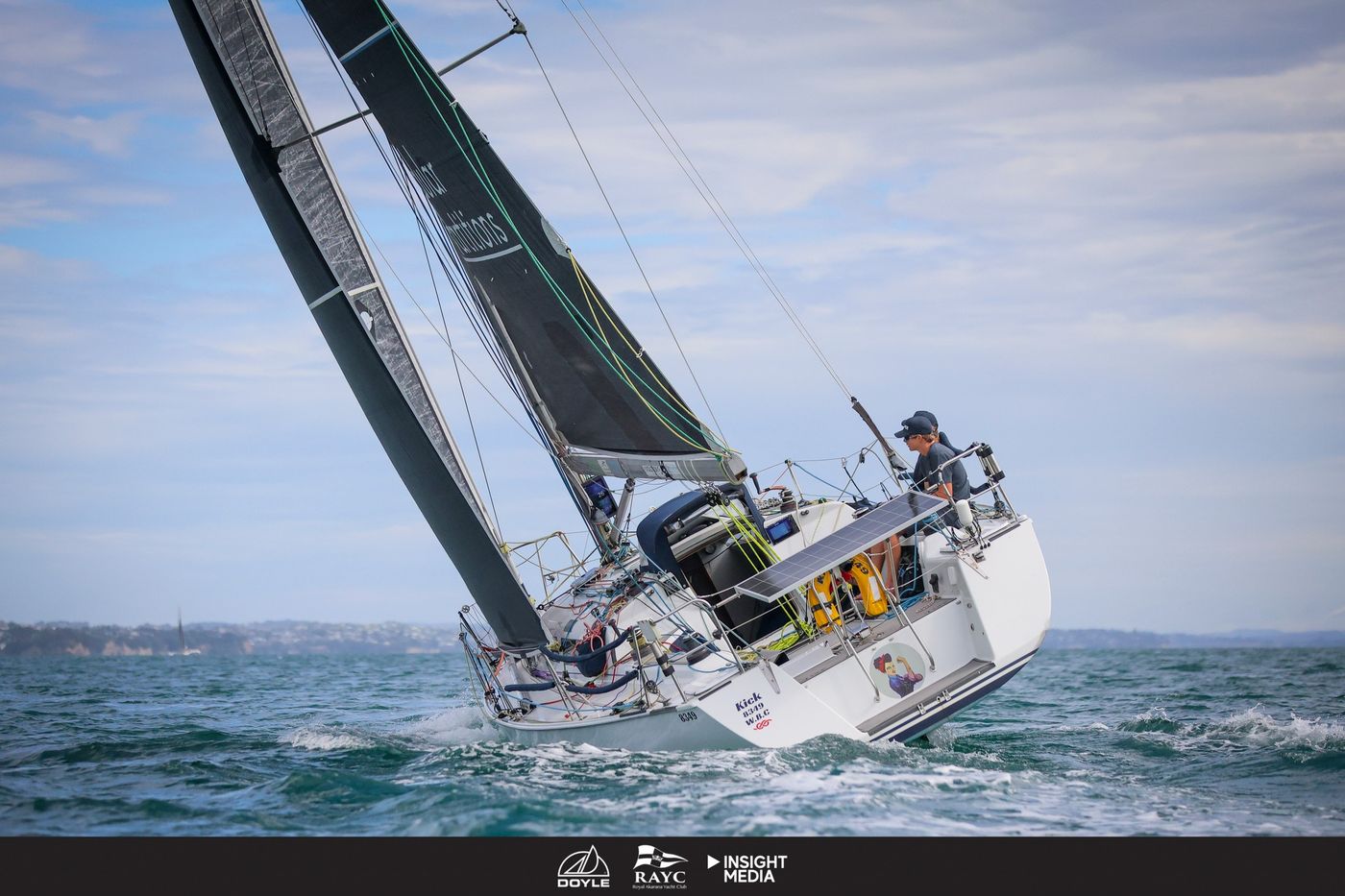
High 5 finished third on elapsed time. Kick came across fourth on the water but produced the most significant corrected time result of the leg. Brendan Sands and Ben Roff's Elliott 1050 won overall on PHRF in 2 days 19 hours 6 minutes 46 seconds, claiming Division 3 in the process. Motorboat III took Division 1 on PHRF, a fitting reward after pushing Explore Racing hard from the top of the island to Queen Charlotte Sound. Pipi, sailed by Steve Newcombe and Craig Parker, won Division 2 on PHRF. Rowan Smith and Lydia Boyd aboard Carpe Diem claimed Division 4 on corrected time.
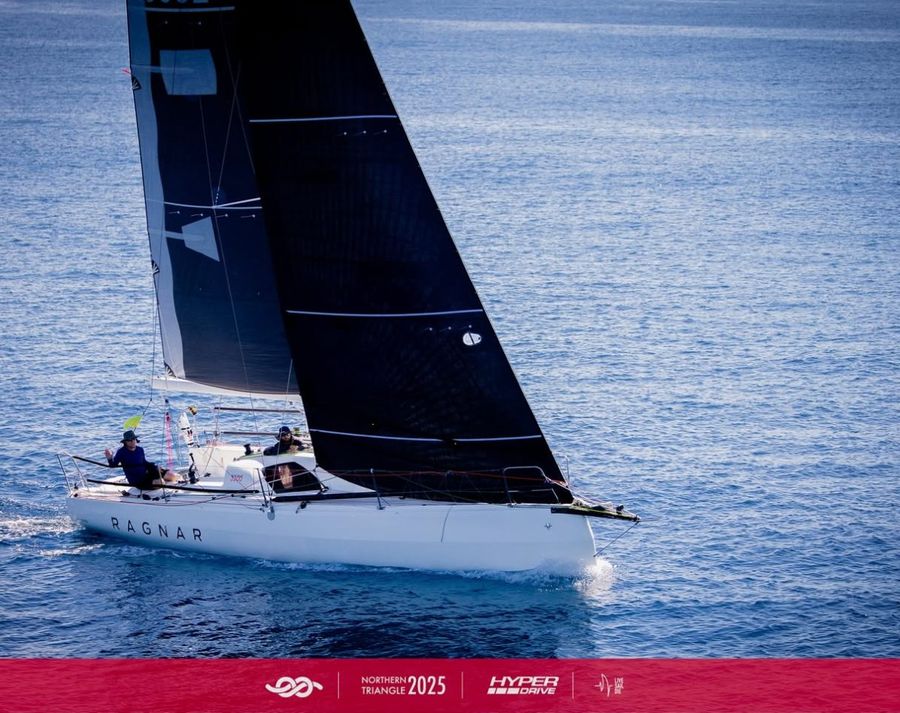
The final results show just how compressed this fleet was over such a long passage. Ragnar finished only 56 minutes 38 seconds behind Kick on corrected time. Niksen was 1 hour 39 minutes 33 seconds back. Further down the standings, Focus sat between Motorboat III and Motorboat 2 with just 13 minutes 34 seconds separating those three boats after nearly 480 nautical miles. On elapsed time, Vixen Racing and Focus finished only 2 minutes 34 seconds apart, while Hotdogger and Start Me Up were split by just 5 minutes 5 seconds. Those numbers speak for themselves.
Highline brought the leg to a close, arriving on Saturday after 5 days 3 hours 33 minutes 12 seconds at sea. Their finish marked the end of a passage that asked hard questions of every crew.
There was only one retirement. Kokomea headed for New Plymouth with the note "All well onboard," which may be the most reassuring five words in offshore racing. For a leg of this duration and difficulty, a single retirement across 26 entries says a great deal about the calibre of the fleet, the quality of the preparation, and the commitment of the sailors themselves.
Leg 2 was not simply long. It was absorbing from the first tactical split, through the brutal first night, and into the slow, pressured chess match down the west coast. It produced sharp racing at the front, tight divisional finishes throughout, and a narrative that held its shape from Mangōnui to the Sound.
The fleet had no time to dwell on it. After a rest day, Leg 3 is now underway, a 220 nautical mile passage from Charlotte Sound to Napier. The start just outside Tory Channel brings southeast winds around 19 knots building into the mid-twenties, with gusts of around 30 knots. From there, crews face Cook Strait, the Wellington south coast, Palliser Bay, the Wairarapa Coast, Cape Turnagain, and eventually the run into Hawke Bay.
If Leg 2 left any doubt about what this race is prepared to throw at its competitors, Leg 3 looks ready to answer it.