The America's Cup turned 175 this year, and its history reads like a thread running through the entire fabric of competitive sailing.
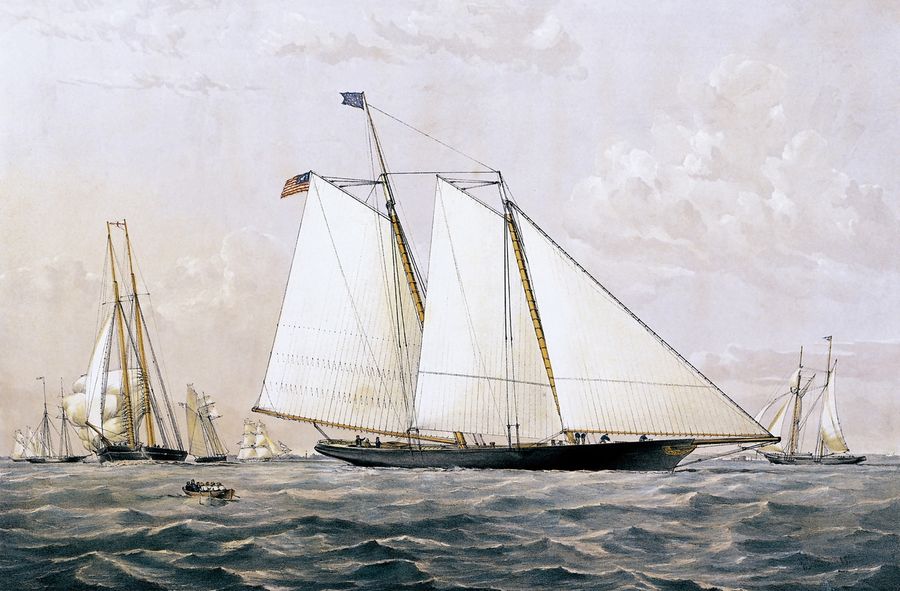
John Cox Stevens brought the trophy home across the Atlantic in 1851. As the first Commodore of the New York Yacht Club, he was a competitive, foresightful man, and one who left a lasting impression on the young Queen Victoria when she stepped aboard 'America' on 23 August, the day after the race around the Isle of Wight.
The Victoria & Albert steamship passed 'America' mid-race on the final approaches down the Solent, after an east-about lap of the island. Caps were doffed. Anglo-American relations warmed, remarkable indeed for a Republican.
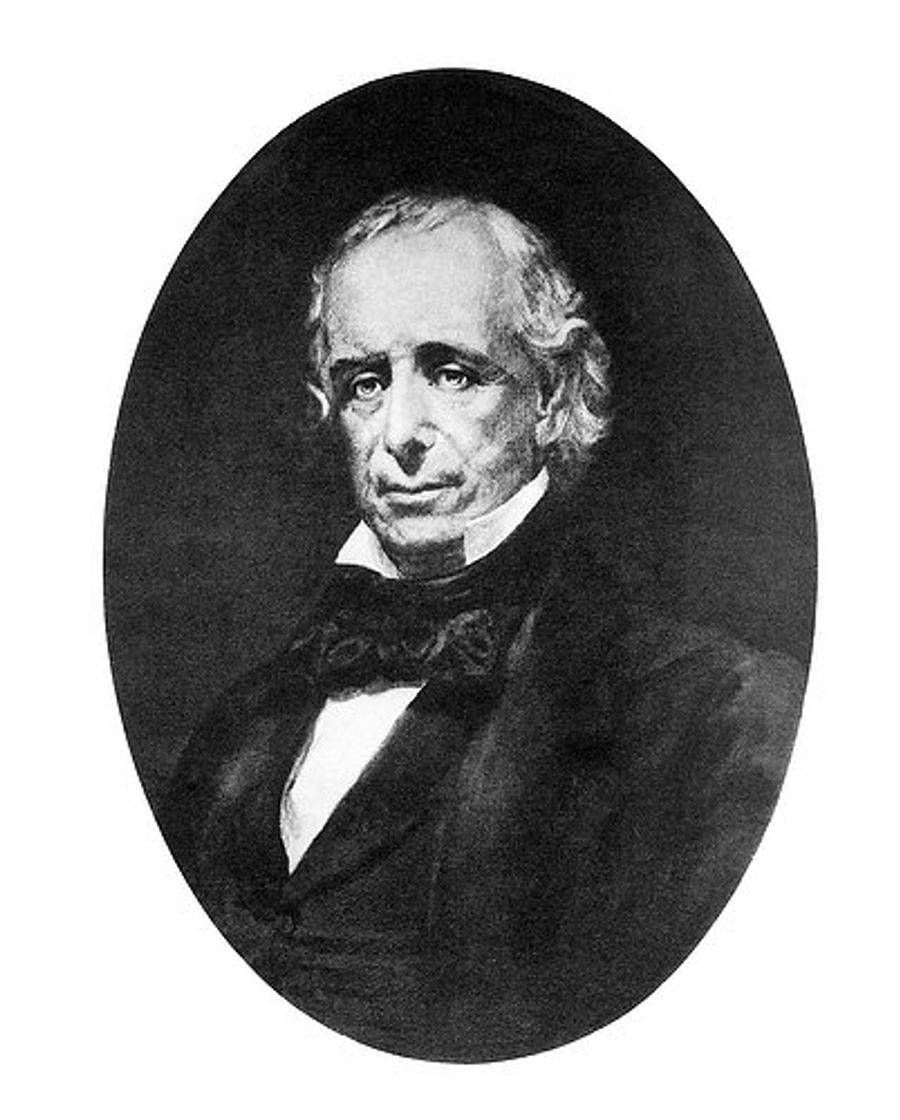
Cox Stevens never lived to see what his prize would become. He died on 10 June 1857, a month before his close confidante and 'America' syndicate member George Lee Schuyler presented the trophy to the New York Yacht Club on 8 July that year. The Deed of Gift that accompanied it, amended in parts but never abandoned, still governs the competition today. Cox Stevens's influence is hard to miss in its promise of "friendly competition between foreign countries", and the early idea of melting the silver down into commemorative medals never got off the ground.
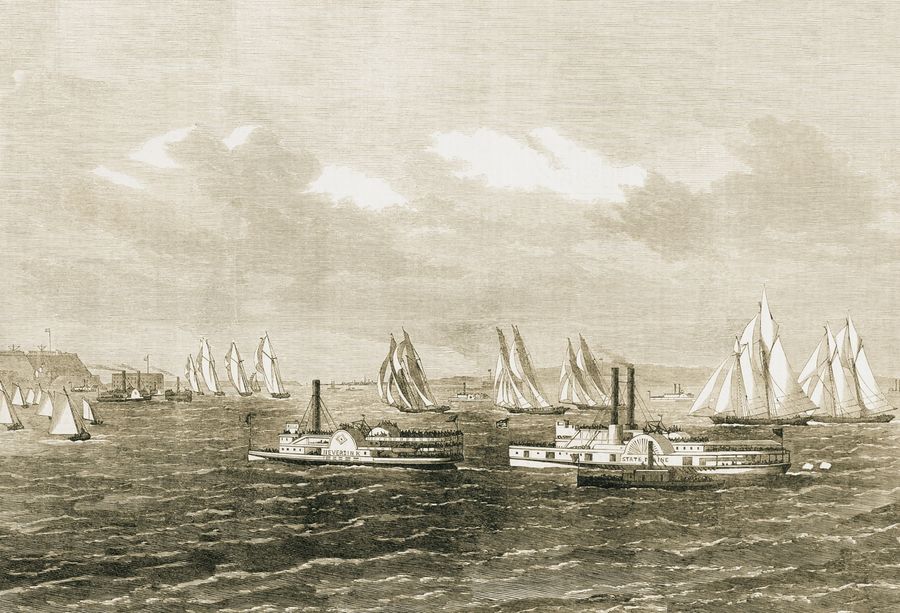
The first challenges came from Britain in 1870 and 1871. The 1871 match planted the first seeds of acrimony, with the NYYC agreeing to match racing but fielding two vessels to choose between depending on conditions. Back then, challengers had to sail their own boats across the Atlantic or down from the Great Lakes to reach New York, an arduous and often treacherous voyage.
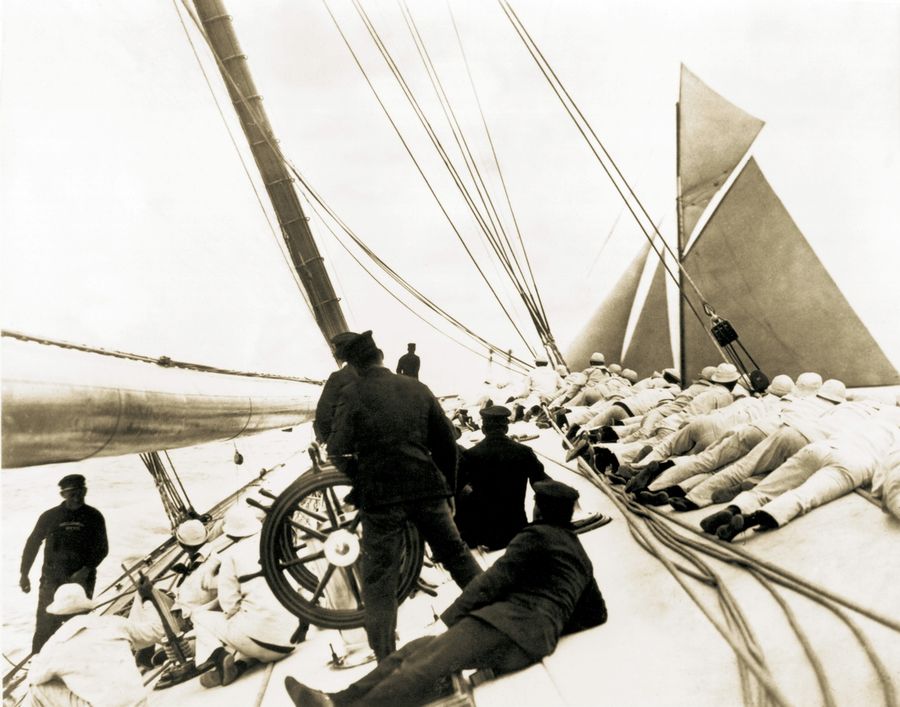
The New York Yacht Club held the trophy for 132 years, the longest winning run in sporting history. The Cup evolved through that stretch from wave-line schooners to cutters, then into the golden age of the J-Class, before the world wars forced it into hibernation. By 1958, in still austere times, the 12-Metre class arrived. The NYYC kept winning regardless, out-sailing, out-designing and out-thinking every challenger.
Royalty and high society took an interest from the very first race. Early challengers from Britain and Ireland were wealthy tycoons, pioneers, industrialists and entrepreneurs, while banking scions and industrial magnates defended for New York. Queen Victoria and Prince Albert were there at the start, followed over the decades by King Edward VII, George V, King Harald of Norway, Prince Albert of Monaco and Prince Karim Aga Khan IV.
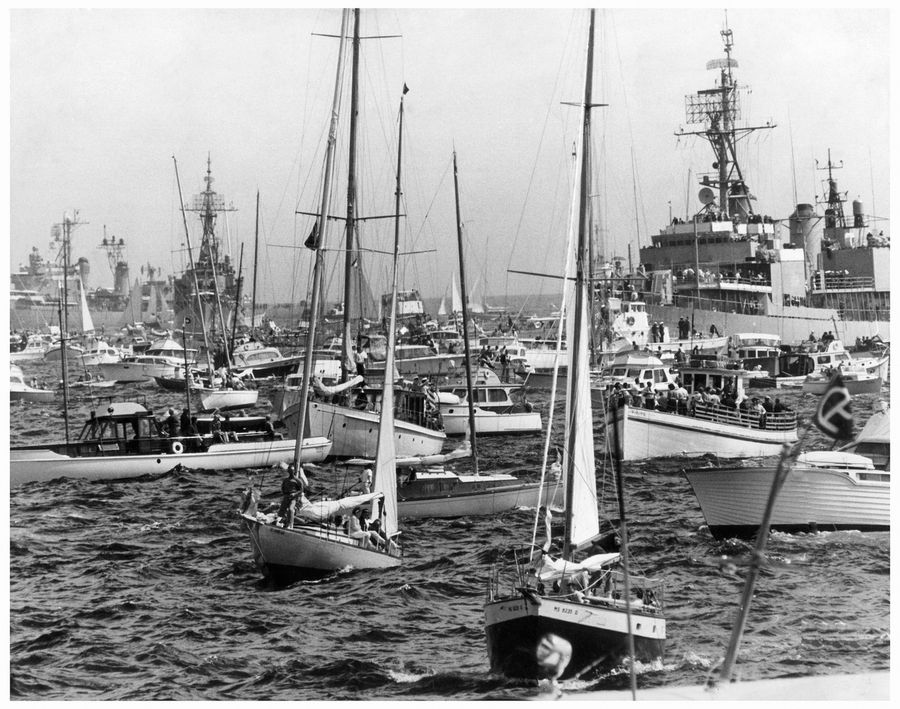
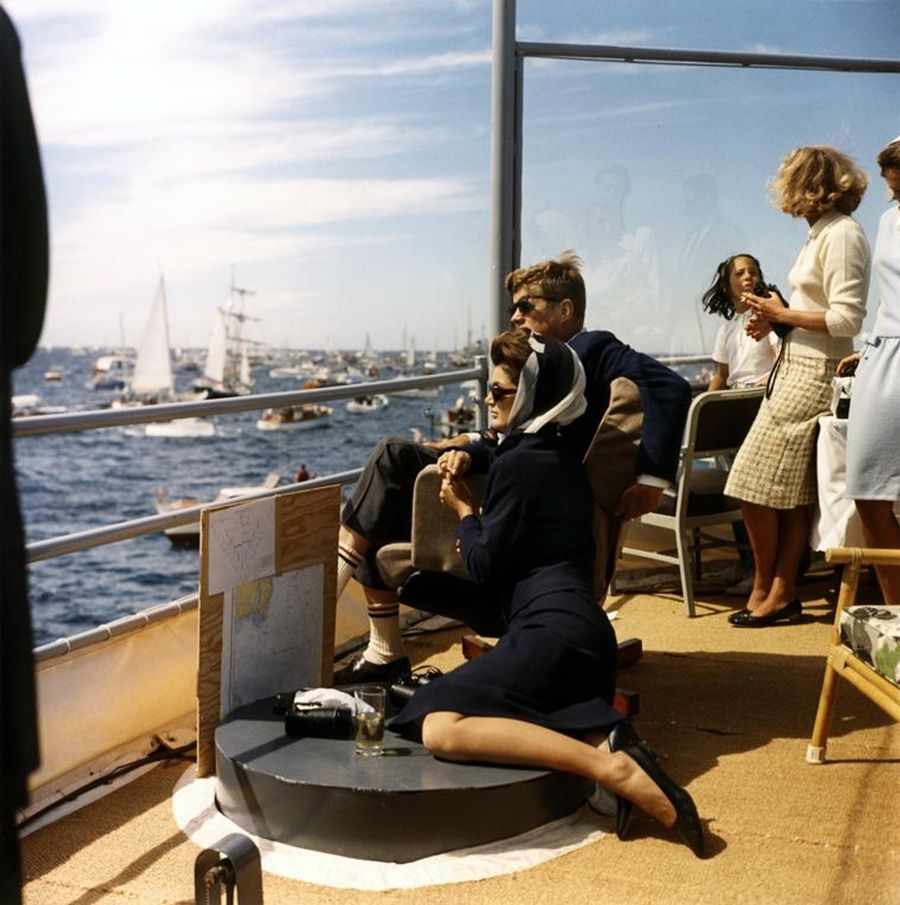
Politicians began turning up from the 1960s. John F. Kennedy and Jacqueline Kennedy Onassis started that trend, and Ronald Reagan, Bob Hawke, George H.W. Bush and Michael Bloomberg followed. Prime Minister Giorgia Meloni greeted the Cup's arrival in Rome this year. Celebrities linked to the event have ranged from Bing Crosby, Humphrey Bogart and Tom Cruise to Cindy Crawford, Morgan Freeman, Russell Crowe, David Beckham, Max Verstappen and Stefanos Tsitsipas. Through it all, the Cup's pull at the top of sport has mirrored society through the ages.
Then, in 1983, the long American reign ended.
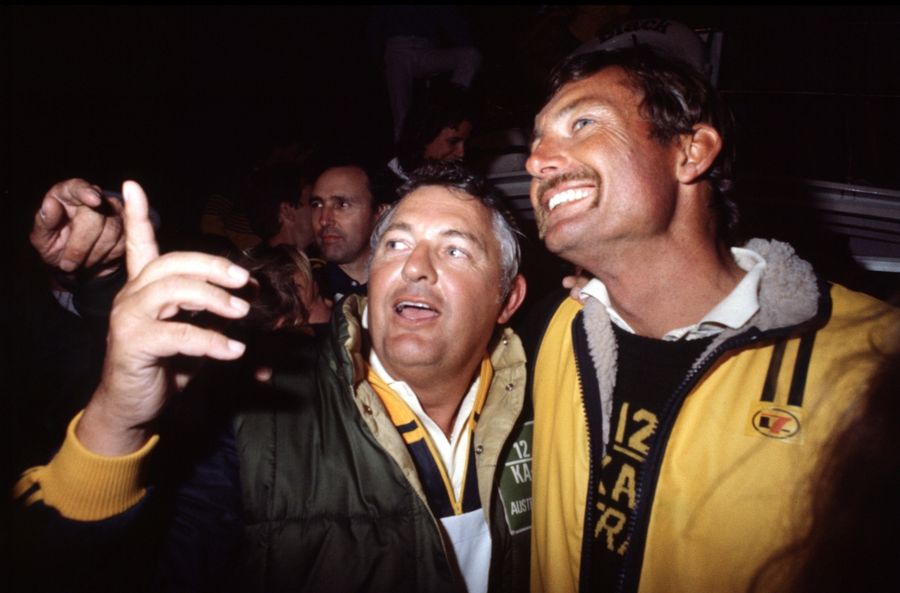
Global advances in sailcloth and the arrival of computer-aided design and tank testing changed the equation entirely. Australia II, fresh off winning the first-ever Louis Vuitton Cup, faced the defender Liberty in a gripping match. With a radical winged keel, the Australians, led by John Bertrand and syndicate head Alan Bond, beat Dennis Conner, "Mr America's Cup," 4-3, firing the starting gun on the modern era.
The Cup went to Fremantle, Western Australia, where the "Fremantle Doctor" blows onshore with regularity and Southern Ocean swells roll in behind it. A global audience tuned in. Conner's redemption, winning the trophy back for his home club in San Diego, earned him a ticker-tape parade down Fifth Avenue as the America's Cup went properly mainstream.
The first Deed of Gift Match, in 1988, pitted a 90-foot monohull against a nippy 45-foot-per-hull catamaran, with Conner again at the helm. The dispute went to court in New York, but the Cup stayed in San Diego. A new class, the IACC, followed. Designers kept pushing materials and physics, sailors turned into athletes, and by the mid-1990s women were competing on equal footing for the first time.
New Zealand became only the third country ever to win the Cup, in 1995. As in Perth, huge infrastructure projects followed in Auckland, the lasting legacy of the modern era.
By 2003, after one successful defence, New Zealand lost the trophy to Switzerland, which became the first, and so far only, European team to win it. Only four countries have ever lifted the America's Cup, a fact that says something about how hard it is to win the longest continually contested trophy in international sport.
Switzerland defended in Valencia and lost a bitter second Deed of Gift Match, run under the strictest reading of the deed. The Cup returned to the United States, landing in San Francisco for one of sport's great comeback stories, as the new AC72 catamarans began experimenting with foiling.
Emirates Team New Zealand got there first, achieving what had seemed impossible by foiling upwind, and built what looked like an unassailable 8-2 lead, one race from the Cup. Oracle Team USA then matched the Kiwis on the foils and completed a stunning comeback, winning 9-8 from match point down. The America's Cup was front-page news again.
Bermuda came next. The Kiwis innovated again, swapping arm power for leg power and introducing cyclors, a concept first trialled below decks back in the 12-Metre era. It worked. They took the Cup home to Auckland and entered a period of dominance never seen before in the event's long history, becoming the first team to win three in a row, across Bermuda, Auckland and Barcelona, in the AC75 foiling monohull.
If the AC75 sits at the pinnacle, the smaller AC40 is the pathway up to it. Emirates Team New Zealand's design office built the boat specifically to close the skills gap for the next generation of sailors. The Youth America's Cup returned in 2024 alongside the inaugural Women's America's Cup, and both were successful enough that women will race alongside men in the AC75 at Naples in 2027.
Eight or nine knots looked like the ceiling back in 1851.
Today, speeds of 55.6 knots have been recorded on the water. The America's Cup has gone stratospherically fast while staying in step with its times, and that may be its greatest legacy of all.
The final word belongs to Dennis Conner on what it actually takes to win: "Commitment to the commitment. The three basic ingredients for winning remain the same: attitude, attitude, attitude."
Cox Stevens, one suspects, would heartily agree.