October marks a significant moment for one of Auckland's most storied sailing institutions. Ponsonby Cruising Club turns 125 this year, and the anniversary is being celebrated with a party on October 4 that doubles as the opening of the Two-Handed Summer Harbour Series. Members, friends and family will gather at the Westhaven clubhouse to hear live music from The Soul Agents and to reflect on a century and a quarter of maritime tradition that has shaped yachting in this city in ways few other clubs can claim.
The occasion invites a look back at how the club came to occupy its particular place in Auckland sailing, from the working fishing boats of St Mary's Bay to one of the longest-running trophy races in the country.
Ponsonby Cruising Club was founded in October 1900, stepping into a yachting culture already well established across New Zealand and Australia. Nelson Yacht Club had been going since 1857, the Royal New Zealand Yacht Squadron (then known as the Auckland Yacht Club, meeting closer to the city waterfront) since 1871, and Devonport, Heretaunga and Takapuna had followed in the early 1900s. Across the Tasman, the Tamar Yacht Club in Launceston had opened in 1837, the Royal Yacht Club of Victoria in 1853, and the Sydney Yacht Club in 1862. These organisations were more than racing clubs. Rooted in the cruising club traditions of the British Empire, they were social institutions where colonists recreated familiar rituals of dining, camaraderie and connection to the sea. Ponsonby fitted that mould from the outset, establishing itself quickly as both a competitive force and a community gathering point.
William Bettany served as the club's first Commodore. The blue pennant with a white chevron chosen as the club's flag in those early days still flies today. By 1905 the club had its own clubhouse, slipway and jetty at St Mary's Bay, the stretch of water running from the Wynyard Quarter to the Auckland Harbour Bridge. The location was well chosen. The yards of Auckland's leading boatbuilders ringed the bay at that time, among them Collings & Bell, Leon Warne, Dick Lang and Chas. Bailey, meaning new designs were launched, refined and raced virtually on the club's doorstep. The bay was designated a protected anchorage in 1909, though storms continued to test the moorings over the following decades. A particularly severe blow in 1928 prompted plans for a breakwater, completed in 1940, which created the sheltered haven that became known as Westhaven.
Learn more from the
Ponsonby Cruising Club
.
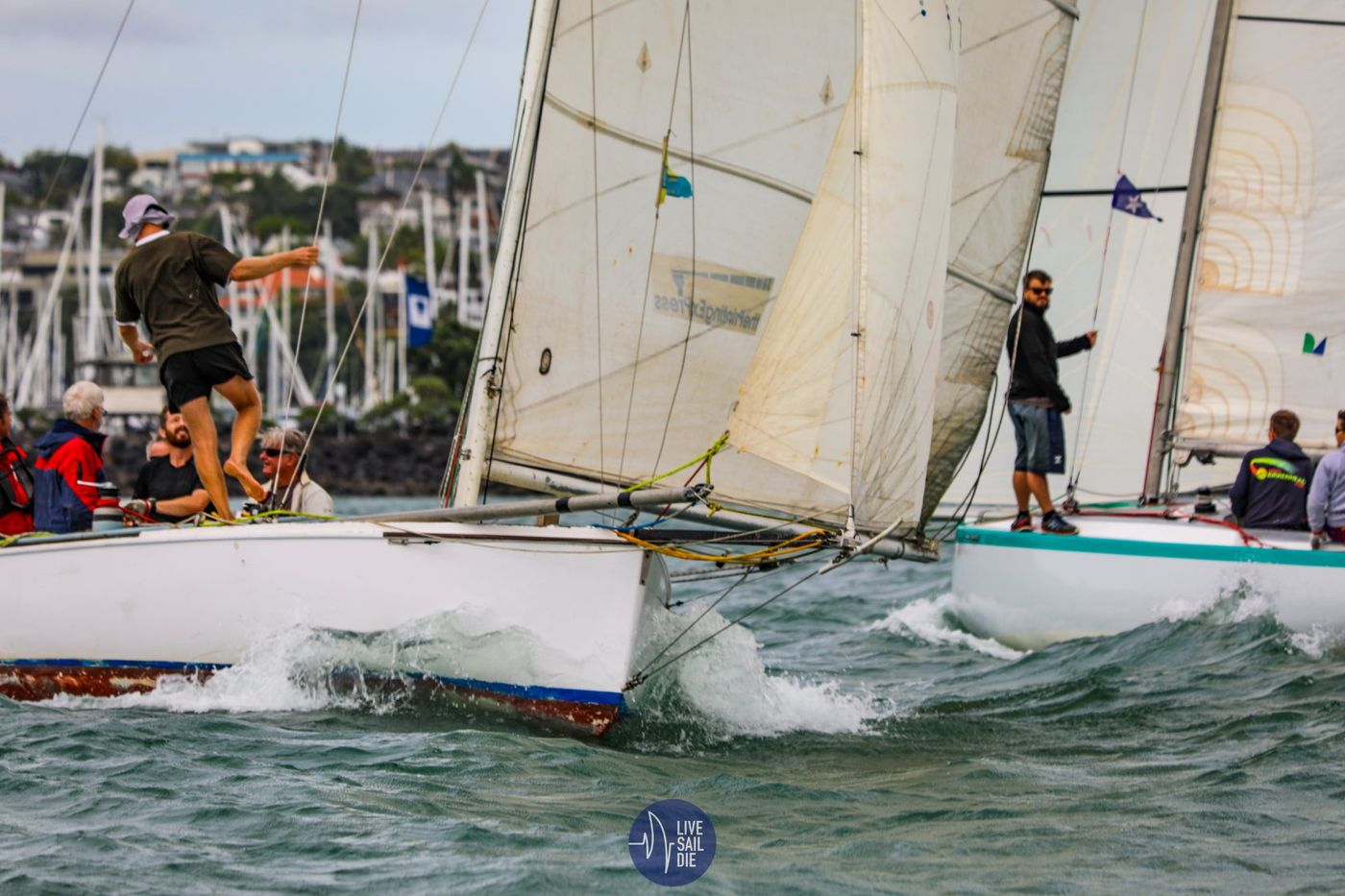
No account of the club's history makes sense without the mullet boat. These shallow-draft centreboarders grew out of the fishing smacks working the waters close to Auckland from the late 1870s, netting mullet in the shallows and racing each other home. Quick, affordable and well suited to local conditions, they became what people at the time called the working man's yacht. By 1903 the Ponsonby Regatta Committee had organised them into four restricted classes of 20, 22, 24 and 26 feet, keeping the boats tied to their fishing origins while shaping them into serious racing machines. Sunday fishing runs regularly turned into impromptu contests on the way back to the bay.
It was the 22-foot class, known as the L Class, that became most closely associated with Ponsonby and with the club's most celebrated piece of silverware. Sir Thomas Lipton was elected Vice President of Ponsonby Cruising Club in 1904, and in 1920 he presented the Lipton Cup for interclub competition. The first race was held in 1921, and it has been contested every year since, in the same boats, under the same rules. That is 104 years of unbroken racing, a record that is difficult to match anywhere in the world. The regard in which the event is held was demonstrated in January 1940, when storms forced every other Auckland race meeting to be cancelled. The Lipton Cup went ahead regardless.
Among the boats that distinguished themselves over those early decades, the 24-footers Glady, Why Not and Maru earned strong reputations, while the 22-foot class produced notable performers in Mowai, Venus, Welcome Jack and Valeria. The most successful of all was Tamariki, built by Charlie Collings and steered by W.A. "Farmer" Willetts to multiple Lipton Cup victories.
Maru, built in 1905, has had one of the more eventful lives of any boat from that generation. She passed through many hands, raced and cruised on both the Waitematā and Manukau harbours, and in 1950 rescued a capsized crew of Sea Scouts. In 2021, she was entrusted to Jason Prew of the Classic Yacht Association for restoration.
The club's junior programme ran alongside the racing fleet from the 1930s, with learn-to-sail classes that at one point even included model yachts for younger children. In 1939 the club adopted the Tauranga Class dinghy, soon renamed the P Class, and by 1943 had established the first official P Class register in Auckland. The class became a rite of passage for generations of New Zealand sailors, and Ponsonby was central to its development. The United Services Trophy, established by the club as a memorial to servicemen overseas, remains a lasting symbol of that era. The Ponsonby Sailing School, which grew from those early programmes, still operates from St Mary's Bay today, more than 90 years later, teaching both children and adults.
The middle decades of the twentieth century brought real hardship. Construction of the Auckland Harbour Bridge and the associated motorway works led to the demolition of the club's St Mary's Bay clubhouse in the late 1950s, leaving the club without a permanent home for a period. Prizegivings moved to the Ponsonby League Club, where women were not admitted, and the Lipton Cup was kept for safekeeping at the Royal New Zealand Yacht Squadron or at Takapuna. Despite the disruption, the club held together. By the early 1960s it had established new premises at Westhaven, with haul-out facilities, and in 1983 it expanded further by taking over the former Auckland Motor Yacht Club rooms to create what became known as the Logan Lounge.
The club's centenary in 2000 was marked by a Golden Oldies Reunion held on March 31, bringing together past and present members to swap stories and celebrate the hundred years since the club's founding. The mullet boats, as always, took pride of place.
Now, twenty-five years on from that centenary, the Lipton Cup continues its annual run, the sailing school keeps producing new sailors, and the clubhouse at Westhaven remains a fixture in the life of Auckland's boating community.
Ponsonby Cruising Club's story comes down to people. The fishermen who discovered their workboats made excellent racing yachts. The skippers who built reputations at regattas across the harbour. The young sailors who found their sea legs in P Class dinghies at St Mary's Bay. The members, across five generations, who gave their time to keep the institution alive through displacements, disputes and difficult decades. As Westhaven Marina continues to evolve, the club remains grounded in that long tradition while staying open to what comes next. Not many clubs anywhere in the world can point to a trophy raced annually for more than a century in the same class of boat, or a sailing school running for over 90 years on the same stretch of water. At 125 years, Ponsonby Cruising Club carries that history forward with the same spirit that launched it in the first place.